Sunday, December 27, 2020

Nikon in 2020: What happened, why and where next for the Big N?

Nikon waved hello to a new flagship and three new mirrorless cameras – but goodbye to its last ever 35mm film camera.

Nikon in 2020 

Ignoring the giant elephant in the room, Nikon fans will remember 2020 as a bumper year for full-frame cameras and Z-mount lenses. Despite challenges posed by the global pandemic, the Big N launched no fewer than five full-frame cameras across its DSLR and mirrorless systems, along with six Z-mount lenses, bringing Nikon’s total lineup of mirrorless glass to 16.

It was a comparatively quiet year for F-mount, but the release of the Nikon D6, Nikon D780 and Nikon AF-S 120-300mm f/2.8E FL ED SR VR was proof that the manufacturer is still delivering the goods for DSLR stalwarts. Alas, a positive year for releases was marred slightly by the recent news that Nikon will no longer manufacture cameras from its Sendai Nikon facility in Japan, with production set to shift to its satellite plant in Thailand. 

And yet with a maturing Z system and Z8 / Z9 rumors galore, there’s plenty to be excited about Nikon in 2021 and beyond.

Nikon hit the ground running with two cameras and a lens release straight out of the gate. The Nikon P950, D780 and AF-S 120-300mm f/2.8E were all announced on 07 January. The P950 boasted a meaty optical zoom – like any of the best bridge cameras should – and was remarkably the only Nikon camera release of the year that wasn’t full frame. The eagerly anticipated successor of one of the most popular Nikon DSLRs ever (the Nikon D750) was Nikon’s first full-frame launch of 2020. The D780 surprised the imaging world by pairing its traditional DSLR build with a 273-point Hybrid AF system for Live View shooting, pilfered straight from the excellent Nikon Z6

Nikon’s announcement that it was developing a fast, premium F-mount optic that would appeal to sports shooters back in September 2019 wasn’t surprising, considering that the 2020 Olympics was – then, at least – just around the corner. And by January 27 when rumors that a new camera registration was the long-awaited Nikon D6, the AF-S 120-300mm f/2.8E FL ED SR VR was the perfect accompaniment.

As expected Nikon’s flagship DSLR was confirmed on February 12 and boasted “the most powerful AF in Nikon history”. The laymen might have found the Nikon D6’s lack of headline improvements surprising, but the pro-spec camera was designed to be a rugged workhorse for working photojournalists and sports photographers specifically, not to mention a bastion of Nikon’s coveted flagship lineage.

The Nikon Z 20mm f/1.8 S and Nikon Z 24-200mm f/4-6.3 VR were the first Z-mount releases of the year. On February 19 we delivered our Nikon P950 review, which scored three stars. We praised its quality EVF, ability to shoot 4K video, portability and mega 83x optical zoom. However, its image quality and launch price prevented it from scoring higher.

The month finished with news that the eagerly anticipated Nikon 70-200mm f/2.8 Z had been delayed indefinitely. 

There was much rejoicing in May, with news that SanDisk CFexpress memory cards were finally fully compatible with the Nikon Z7 and Z6, broadening the full-frame mirrorless duo’s CFexpress support.

May was also the month the Big N gained plenty of cultural capital thanks to GQ's June/July 2020 issue, when Twilight superstar and the Caped Crusader himself, Robert Pattinson, used a Nikon DSLR to shoot his own cover.

Nikon was back with a slew of releases including two teleconverters and a standard zoom, but the big news was the surprisingly swift announcement of the Nikon Z5. The entry-level full-frame mirrorless camera featured a 24.3MP sensor, IBIS, provision for dual UHS-II SD cards and an almost identical form factor to the existing Z6 and Z7.

The accompanying Nikon Z 24-50mm f/4-6.3 kit lens was touted as "the shortest and lightest full-frame mirrorless zoom lens," by Nikon, weighing in at just 195g. Of the two new Nikon Z teleconverters announced, the Nikon TC-1.4x, boasted an increased reach of 40%, while the Nikon TC-2.0x, enabled users to double their lens’ focal length. At the time the teleconverters were only officially compatible with the Nikkor Z 70-200mm f/2.8 VR S, which was still sitting in release date limbo.

The Nikon Z50 received a welcome firmware update that implemented Animal AF just like its full-frame Z camera siblings. This meant the DX mirrorless camera could detect the eyes and faces of dogs and cats.

As the world leaned into remote working in a bid to combat the coronavirus pandemic, Nikon announced its Webcam Utility software, enabling many Nikon users to use cameras as webcams

While the photographic industry continued its push towards mirrorless, and the world of 35mm film cameras shrank ever smaller, August was the month that the legendary Nikon F3 celebrated its 40th birthday.

On September 16 Nikon announced yet more mirrorless lenses in the form of the Nikon Z 50mm f/1.2 S and Nikon Z 14-24mm f/2.8 S, two super-fast lenses from the manufacturer’s premium S-Line of optics. 

And the month drew to a close in the best of ways when a countdown timer appeared on its website for the Z6 II and Z7 II…

Only one thing was on the minds of Nikon fans in October: the dual release of the Nikon Z6 II and Nikon Z7 II. The full-frame mirrorless pairing’s headline specs included dual Expeed processors, better autofocus and – by popular demand – dual memory card slots. 

The well-rounded Z6 II was built to include a much higher maximum ISO, better low-light focusing and faster burst speeds. While the stills-focused Z7 II was armed with a mighty 45.7MP sensor and considerably more focus points.

In our Nikon Z6 II review we awarded the camera four stars and praised its dual card slots, improved burst shooting and boosted AF performance – though the camera’s hybrid shooter-targeted audience meant that we would have preferred a fully articulating screen and uncropped 4K UHD at 60fps. 

And yet the Z6 II’s refined rather than reimagined upgrade from its predecessor is a reminder of just how good the Nikon Z6 really is. The Z6 II is clearly the definitive offering out of the two, and when you consider its competitive pricing and all that lovely Z-mount glass, it comes highly recommended.

Our Nikon Z 14-24mm f/2.8 S review signaled the complete ‘holy trinity’ of fast Z-mount zooms and just missed out on top honors with 4.5 stars. Despite the hefty price tag we were mightily impressed by the lens’s “Stunning image quality” and “Excellent build and handling,” exactly what we’ve come to expect from Nikon’s excellent S-Line of lenses.

Nikon kicked off the festive season by updating the D850, D5 and D500 with CFexpress card support. CFexpress’s backwards compatibility meant it was only a matter of time until the trio of XQD-touting DSLRs got CFexpress Type B support… but did it spell RIP for the XQD format?

We then caught wind that the legendary Nikon F6 had been discontinued. Nikon’s last ever 35mm film camera was on the market for a staggering 16 years and, although the news wasn’t altogether surprising, it was definitely the end of an era.

Fitting of the festive season, Nikon Europe announced it would team with the NOOR Foundation to provide free training to aspiring documentary photographers. 

2020 has been a difficult year for the photography industry and the wider world in general. And yet when it has mattered, Nikon has delivered the goods. Despite the odds, the Big N managed to bring us six new cameras and a plethora of top-notch glass. As the manufacturer shores up its Z-mount lens line-up, and with rumors of a beefy Z8 / Z9 on the horizon, we await 2021 with bated breath.  Share this article.


Black Lives Matter: My year as an accidental anti-racism activist

Tags: Photography for Beginners, George Floyd,  Activist

By Kate Rimmington


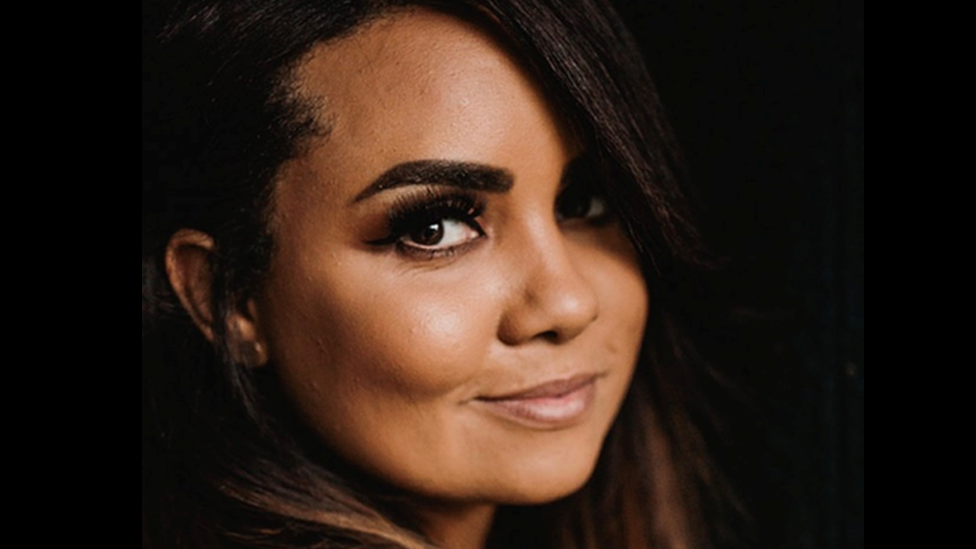
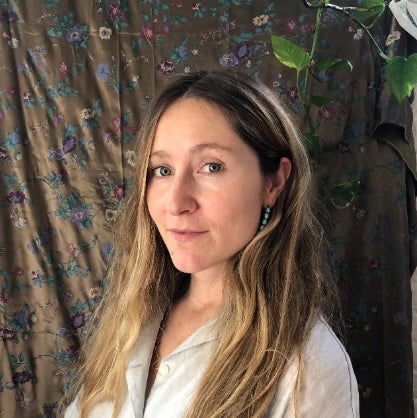
 Tash Jones 

In May, the UK was in lockdown and George Floyd was killed by US police officers, prompting a global outpouring of grief and anger - and an increased sense of urgency around the Black Lives Matter movement. For one black Welsh woman, 2020 changed her life.

At the beginning of the year, photographer Tash Jones had a full diary of weddings to capture, and her own marriage to plan.

Then the Covid-19 pandemic struck, preventing large weddings - and in May George Floyd was killed after being pinned to the ground by a police officer in Minneapolis.

The combination of events led to the mother-of-two from Denbighshire becoming an "accidental activist".

Born to a white, Welsh-speaking mother and a black Jamaican father, Ms Jones was subjected to sustained racist bullying throughout her childhood, once resulting in her hair being set on fire when she was a teenager, and excrement being left on her doorstep.

George Floyd's death and the social media reaction of many of her white friends and acquaintances pushed her into being more vocal about her own experiences and worries for her young children.

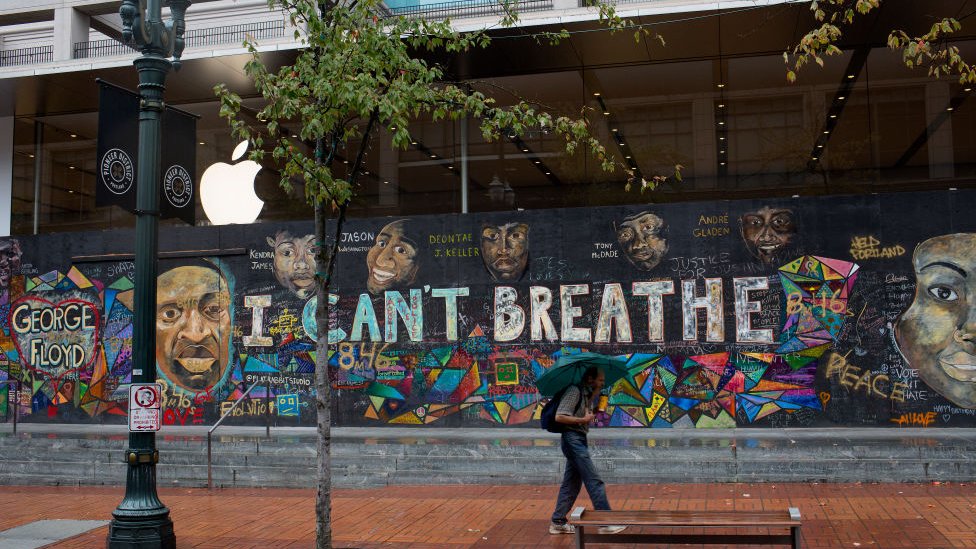
A mural reading "I can't breathe" with images of George Floyd
A mural in Oregon commemorates the death of George Floyd, which shocked the world in May

As her wedding jobs were cancelled, she found herself being asked to speak at virtual industry conferences, including one held by Looks Like Film, a large international photography platform.

"I was kind of thrust into speaking really. It wasn't really in my to-do list," she said.

She was also motivated by "how I felt about my children, not being represented, and having the same struggles that I had growing up in north Wales".

"That left me feeling really queasy because I know how hard it was and I don't want that for them. You always want better for your children."

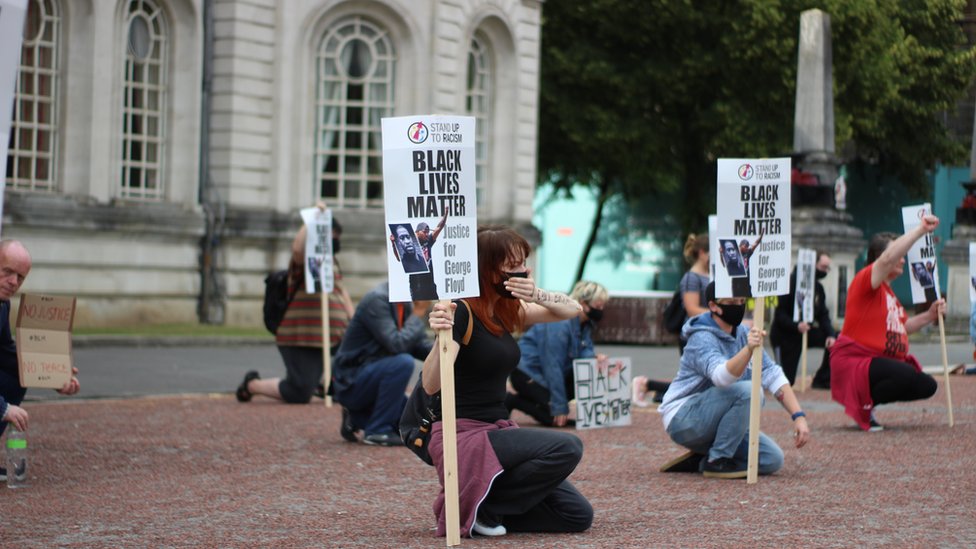
People took the knee outside City Hall as part of the Black Lives Matters movement
Protesters took the knee outside Cardiff's City Hall as part of the Black Lives Matters movement

"I think because of lock down, and everybody having their jobs or their hobbies and their social circles taken away, [Black Lives Matter 2020] obviously got more attention because people were forced to watch it and couldn't look away.

"I was getting a lot of messages from clients, from old friends, from acquaintances and people I don't even know, asking me what they can do to be better, or what they can do to be anti-racist.

"And that was a massive pressure for me, and it was detrimental to my mental health because I found myself having to almost handhold everybody I know through a situation that was more harmful to me.

"It was hard to read comments from people that I thought were my friends, showing their true colors. That was so sad because I thought I was a good judge of character. Honestly so many people surprised me."

She started a Facebook group "Let's Talk with Tash", where she discussed other issues too, including mental health and plus-size, and also participated in a panel with Dr Rosena Allin-Khan MP on mental health among wedding industry professionals during the pandemic.

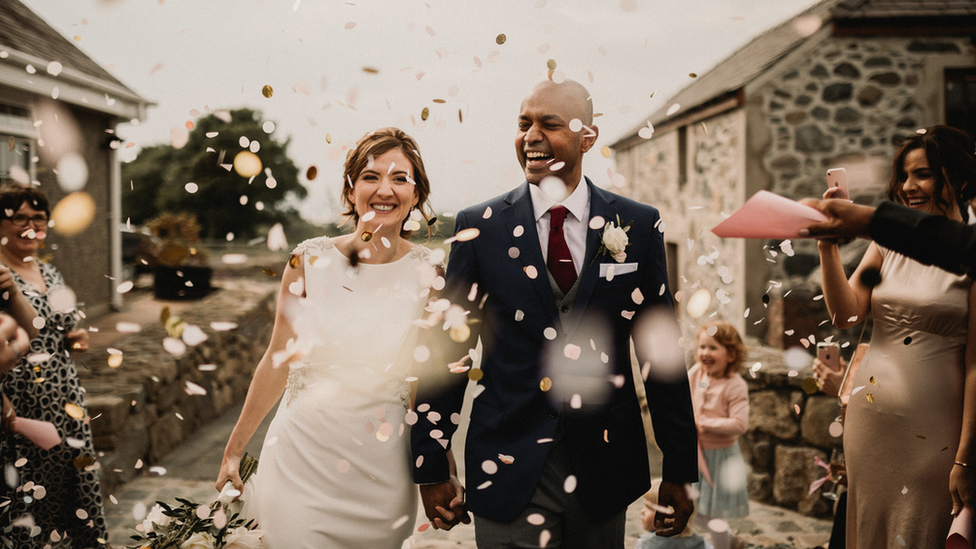
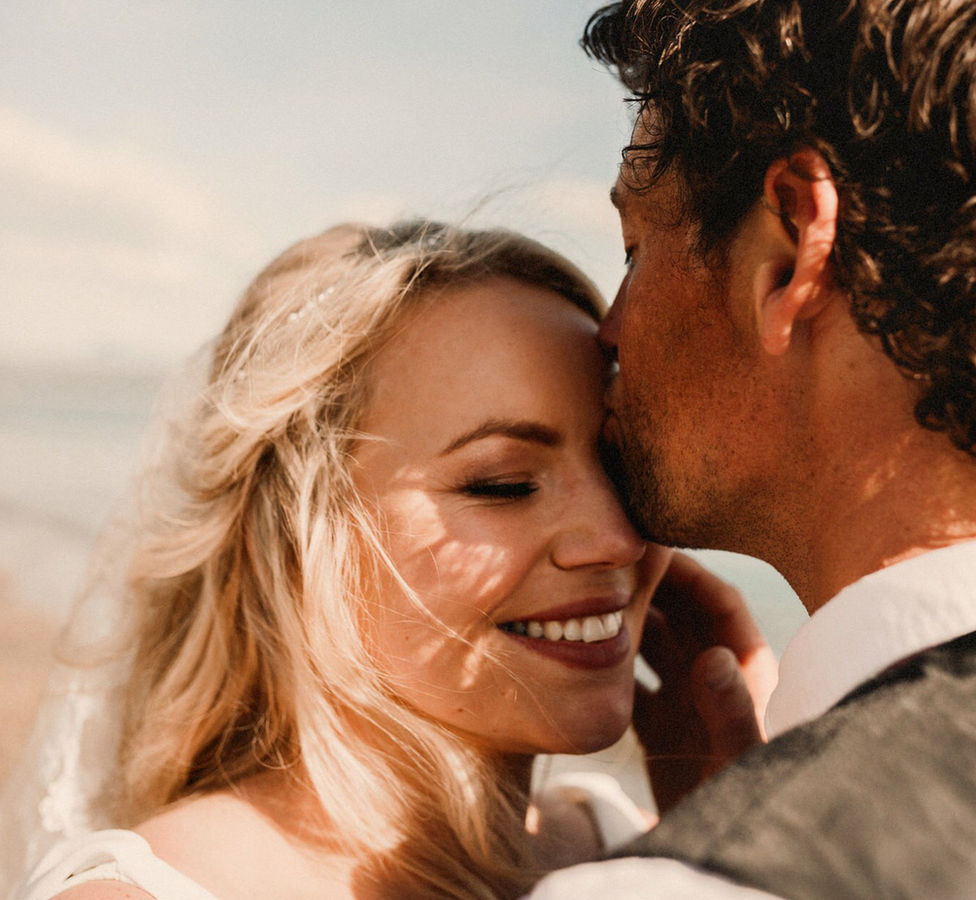
A picture of a wedding couple with confetti falling in front of themi
Tash Jones' work won her a place on the Professional Photo magazine's top 50 UK photographers list

A high point of the year was to be named as one of Professional Photo magazine's top 50 UK photographers.

Partly to set an example to her children, she sent the story to a local paper.

Based on the experience of others, including black female MPs, she anticipated there could be a mix-up of her photos. She sent separate emails containing her own photo, and portraits of other black people.

But instead of picturing her, they mistakenly put her name against an image of one of her black clients, something she said seemed to happen much more to people of color.

For someone who had fought to be recognized, and endured lifelong racism, the mistake triggered painful memories.

"I was crying my eyes out. It was just a shock... It reaffirmed all those childhood thoughts that I had that I'll never be good enough, that I'll never be [recognized or] important. I can't tell you how massively that impacted me."

She said the mistake also upset other black people - the American client whose photograph was mistakenly labelled, the UK black female photographers network, and her young son, who said "we don't all look the same".

She said positive representation was so important because, during her childhood, cultural depictions of black people were overwhelmingly negative.

"In films, I would see [black] people who were on drugs or not very good in school and saved by somebody white, or on crack or leaving their kids, or the dads abandon them... I actually thought I didn't have a chance of doing anything."

She said the reporter who made the mistake was "mortified", and the paper issued a correction and apologized for any distress caused.

But the incident underlined her view that much more needs to be done by organizations to improve diversity and deliver sustainable change.

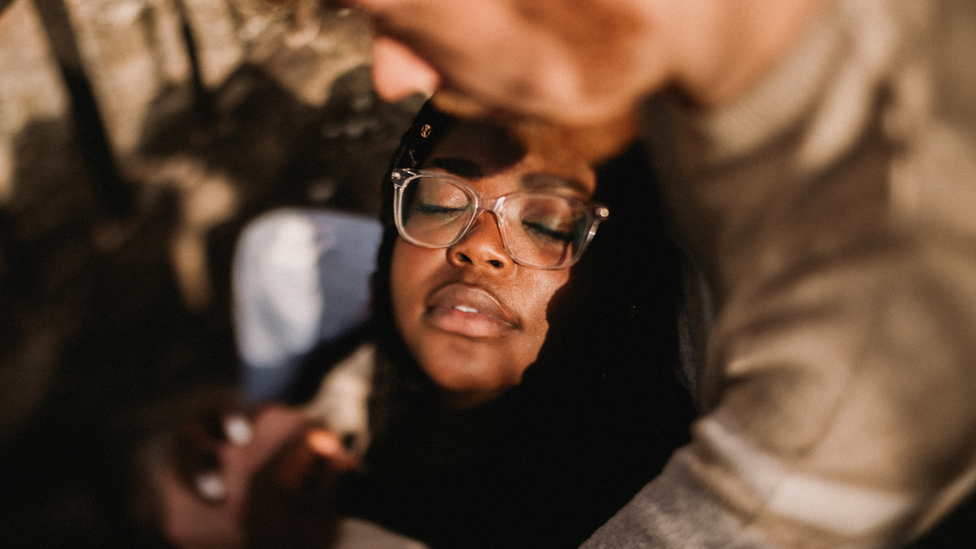
A woman smiling while embracing her new husband
This photo is of woman in the arms of her partner, with just her relaxed happy face in focus 
"Couples in love" like these photos is the focus of much of her photography work

This applies as much to the wedding industry as any sector, she said.

As Black Lives Matters protests spread in the summer, big wedding blogs switched from featuring predominantly white people to black brides and grooms.

"All of those images that they all posted simultaneously for weeks and weeks and months and months - that content was available to them prior to George Floyd being murdered.

"Why weren't you posting it then? Why is it taking a worldwide tragic event in uproar for you to be posting diversity?

"That doesn't sit right with me... So people felt the need to perform, when really they should have been addressing why it wasn't like that in the first place."

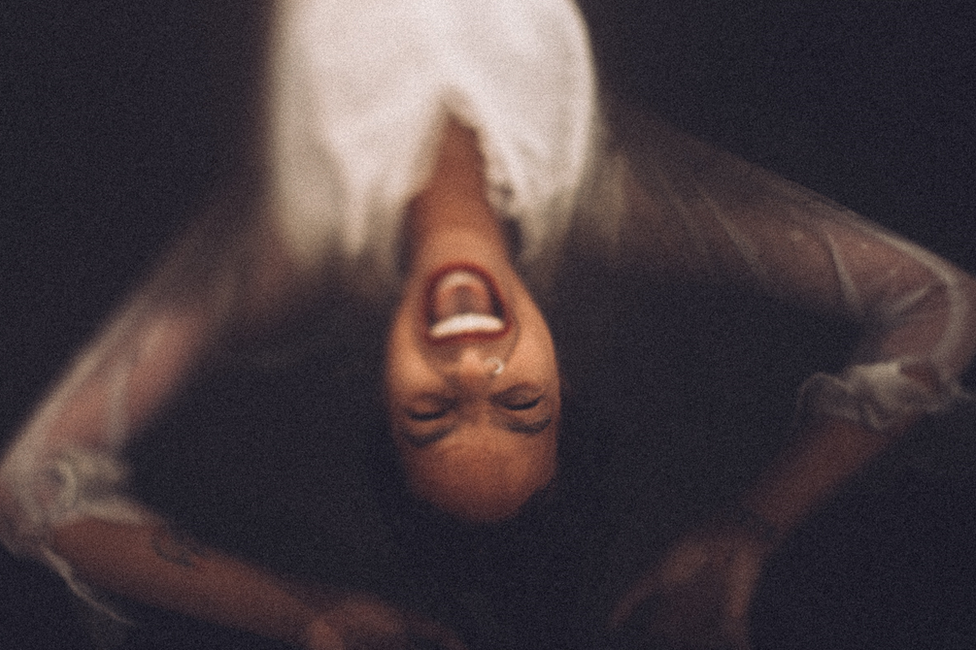
A woman in a white dress screaming while laying back in dark water
One of Tash Jones' "Dŵr Du" series, which was part of an exhibition of black female photography

Going into 2021, she wants to capture more pictures of "love and life" again and diversify her portfolio, as she did earlier in the year when her series of images Dŵr Du (black water in English) was selected for the We Are Here exhibition, which showcased black female photography.

"Most of all I wish to have a relatively stress-free year... and see a real change in systemic racism and those in power taking this to heart.

"Change is long overdue and I hope that people don't forget what needs to be done."  Share this article.


Friday, December 25, 2020

              Free Photography E-books just in time for Christmas                                             


Thanks for stopping my blog today.  I hope you'll enjoy the Christmas Freebies I have listed for you below, and that you'll come back often.  If you're a newbie photographer, this blog and especially this post has you in mind.  Below are photography freebies.  Just copy and paste the URLs into your web browser, click enter and enjoy.  My Christmas gifts to you.  Enjoy, and have a Merry Christmas !


1. Depth of Field button explained

    https://mrdarrylt.blogspot.com/2019/02/depth-of-field-preview-button-explained.html?spref=pi 


2. Wild Flower Photography

    http://photonaturalist.com/free-ebook-on-wildflower-photography/


3. Five easy steps to shoot in manual

    https://docs.google.com/file/d/0By4lKYqAkAS5YTU0OTMzNGQtMjRmYS00NGJkLThhMWMtYjUzMDdmMzgwN2Nm/edit?pli=1


4. Ultimate Field Guide to Photography

    https://www.nationalgeographic.com/ebooklets/e_ultimate_photo_guide.pdf


5. The Shy Photographers' Guide 

     https://photographyconcentrate.com/shy-photographers-guide-confidence/


6. How to make $500 per month from your photography as an Amateur Photographer

    https://mrdarrylt.blogspot.com/2020/01/how-to-make-500-month-from-your.html 


Please share this page with your friends.  I suspect they will like getting free stuff too.                                                                                                                        

Wednesday, December 23, 2020


Photographer Chris Maggio Wants You To Think Objectively About Christmas Traditions

 Tags: Photography for Beginners, Photographer, Film Photographer 


  by: Pia Peterson


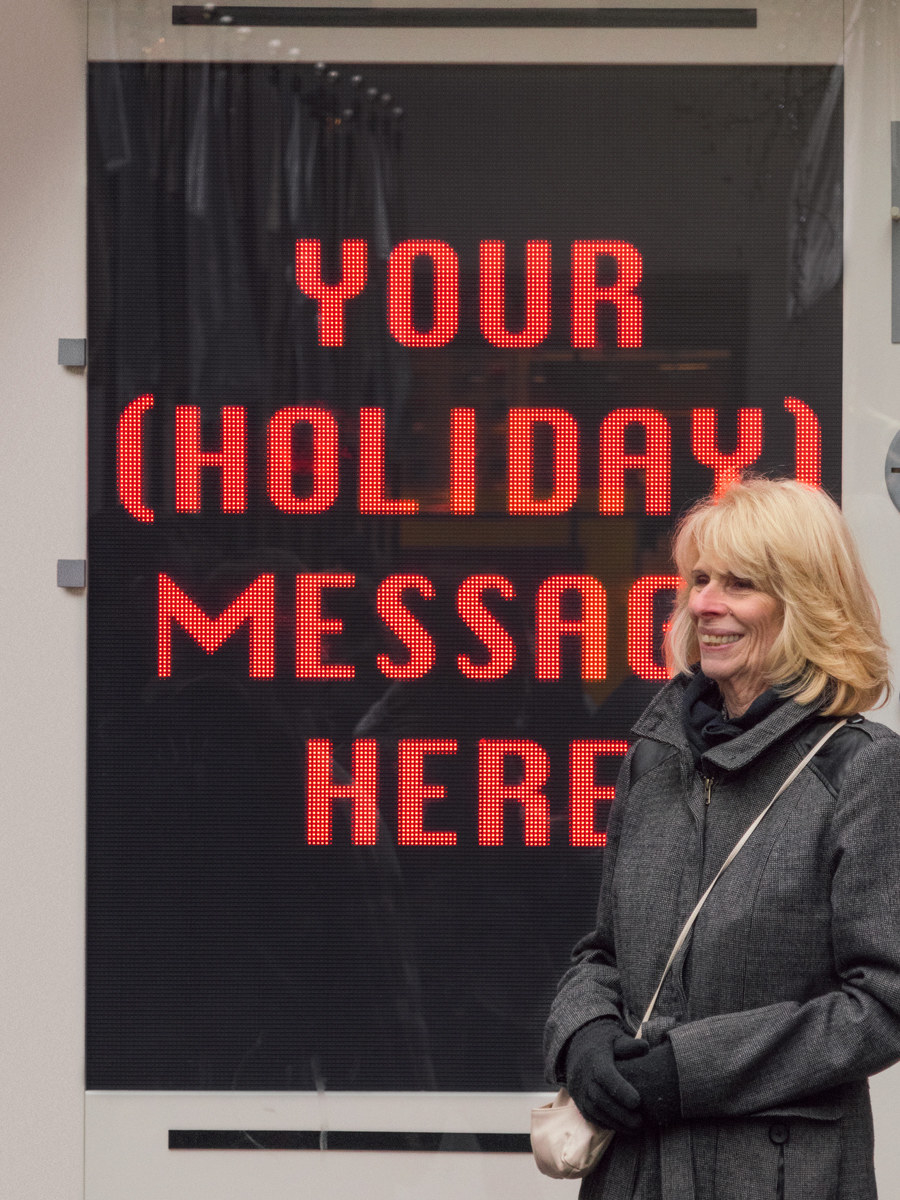
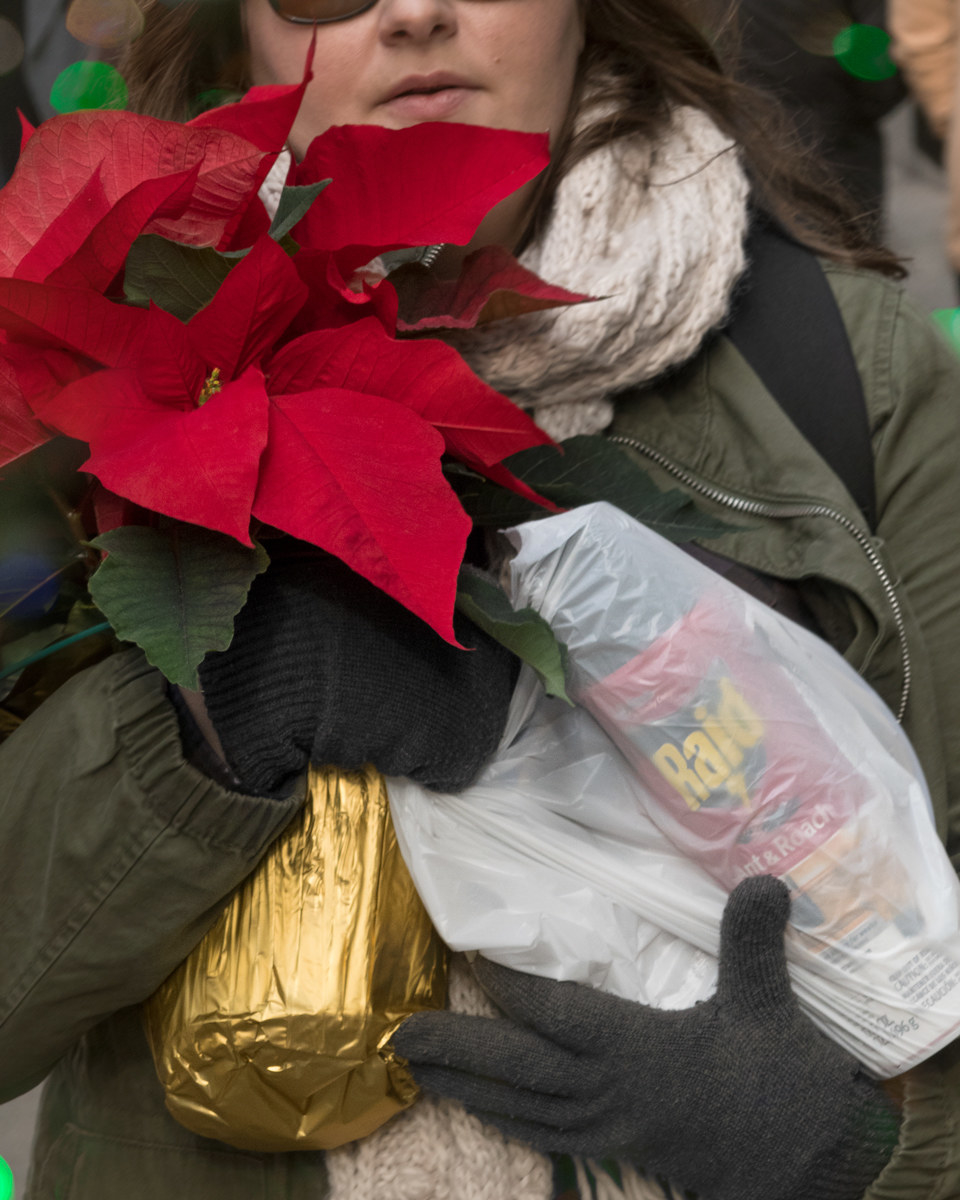
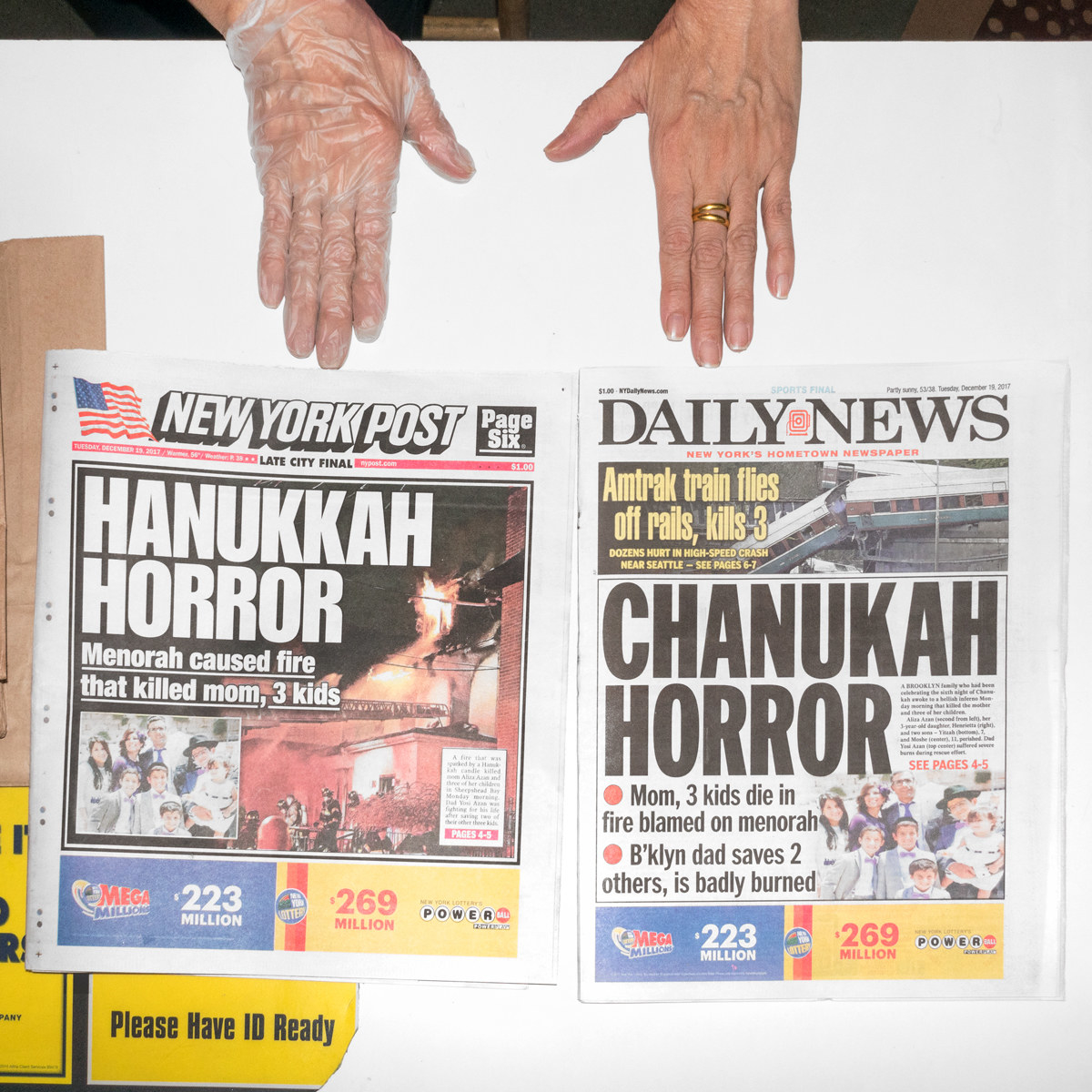
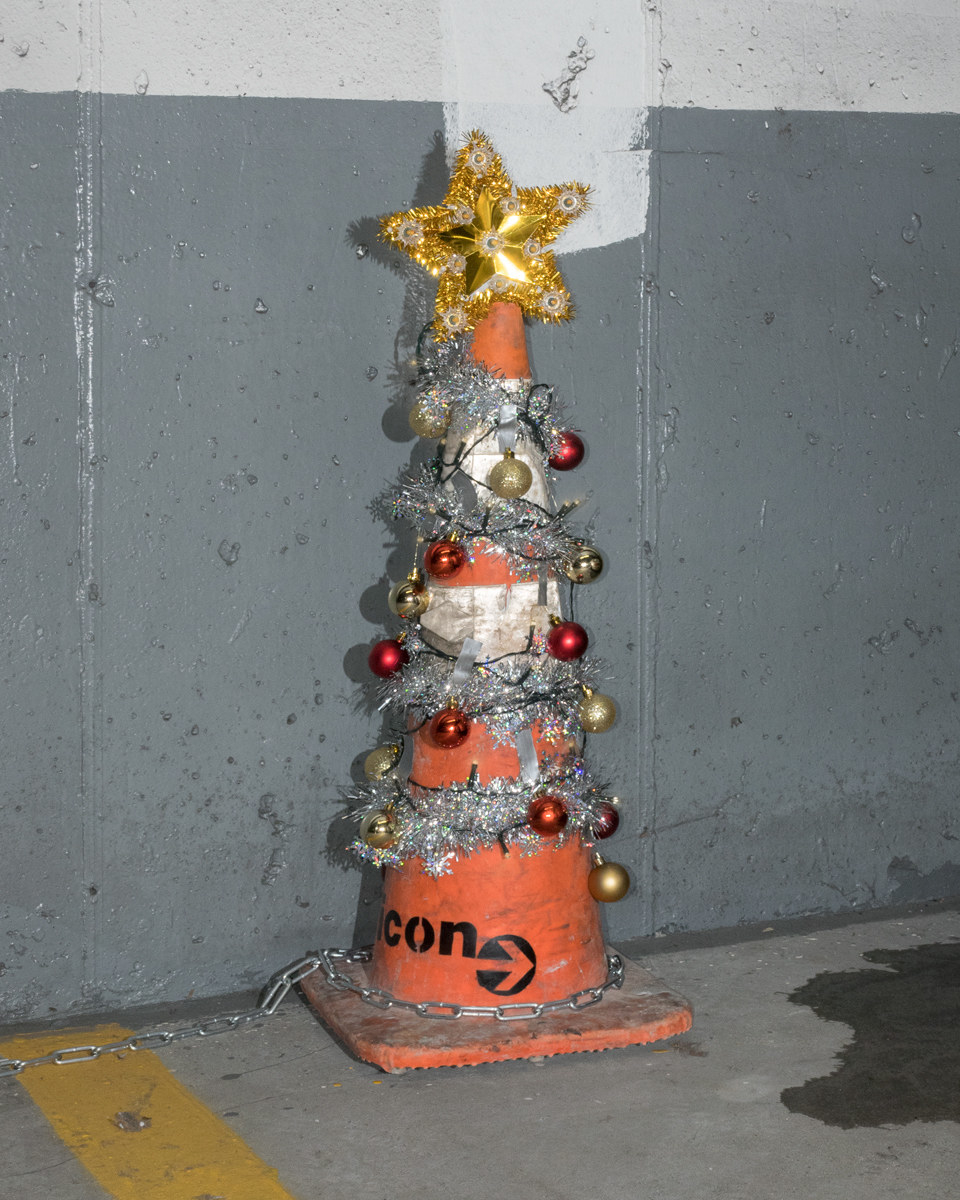
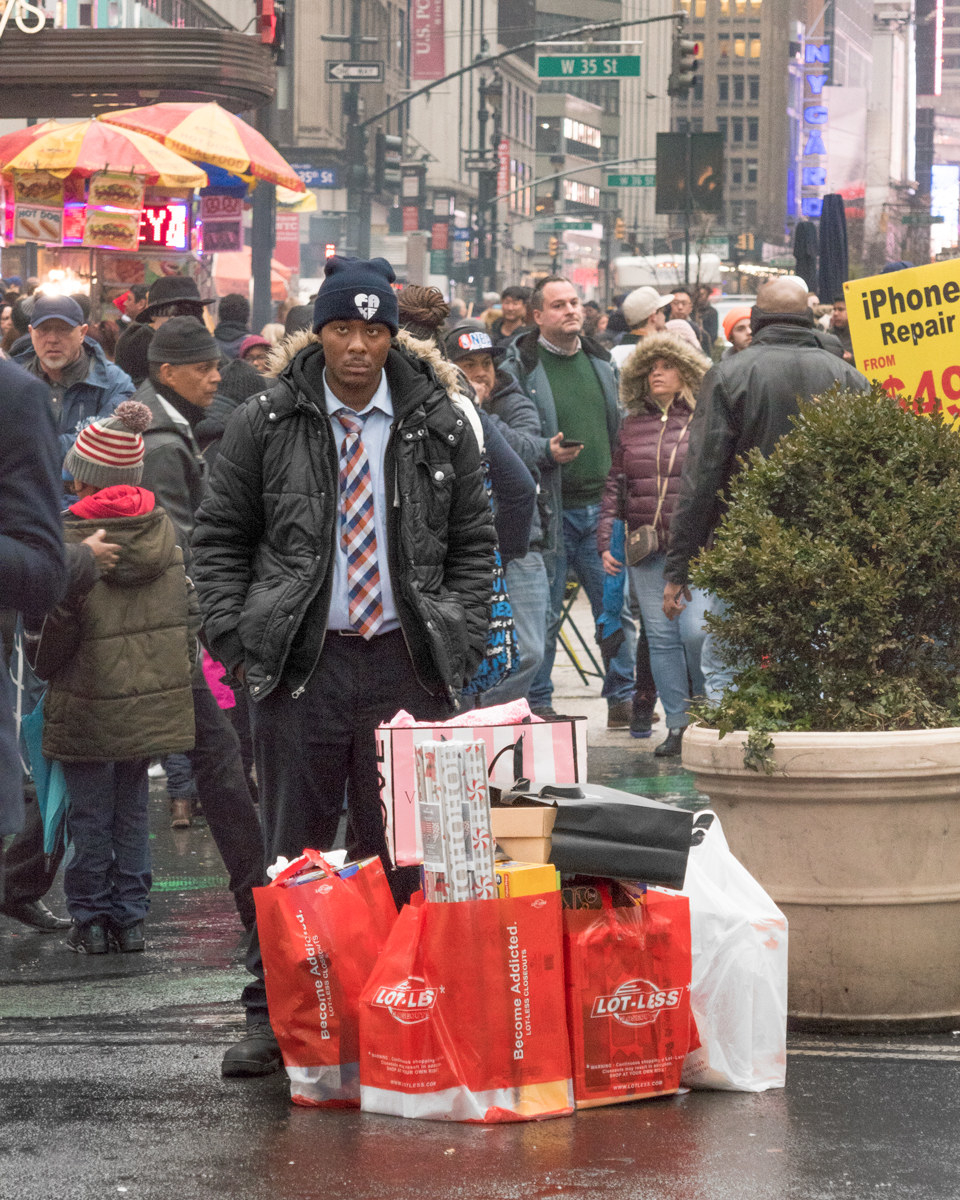
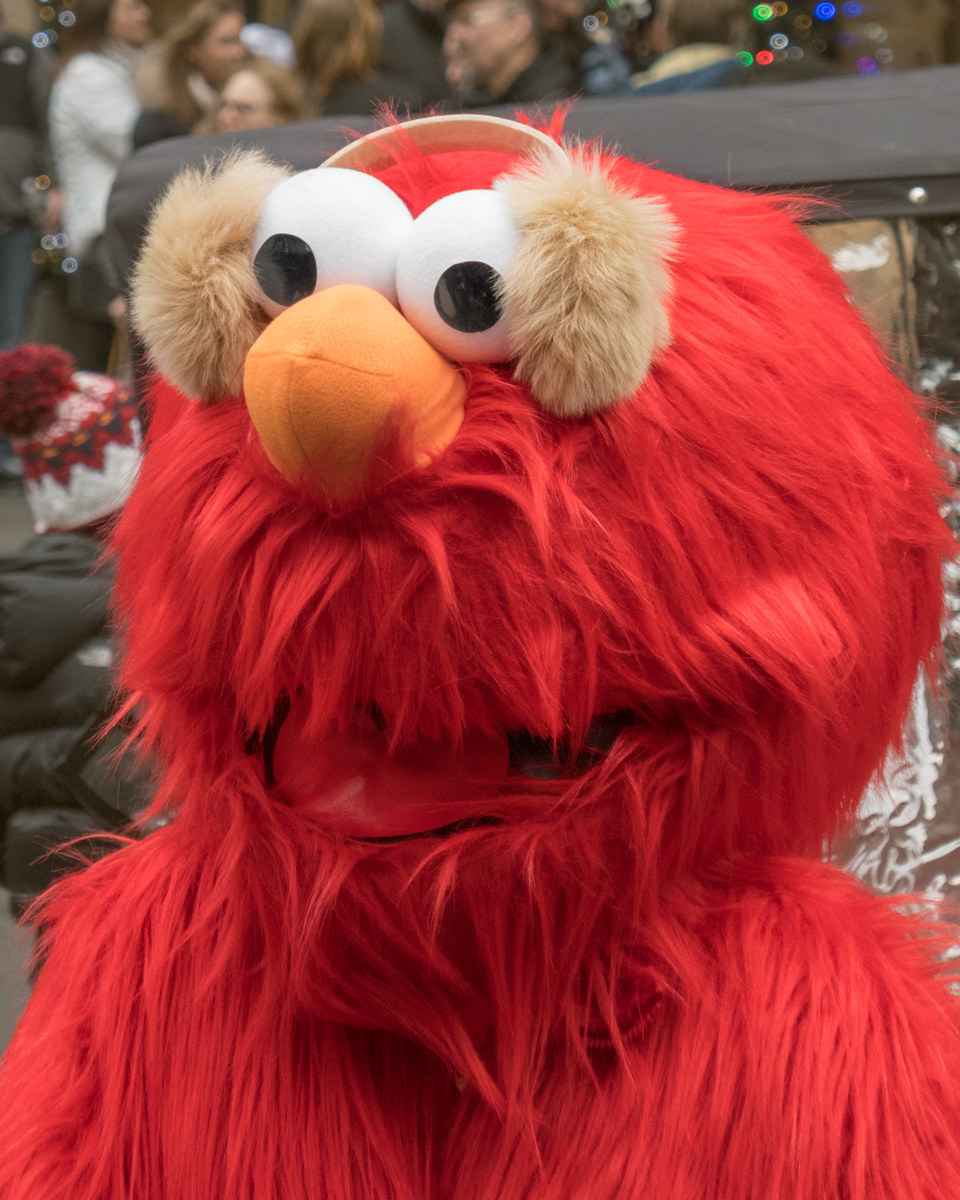
Photographer Chris Maggio is smart — the kind of person who can talk seamlessly about film, photography, politics, and capitalism without ever seeming to grasp for an idea. This may be why he captures photos in a way that makes even the most banal things — office lunches, parking garages — seem interesting and new. After going to school to be a filmmaker, Maggio found himself gravitating more toward his on-again, off-again hobby of taking pictures. He works as a professional photographer, and lives in New York City “with 8.4 million of his closest friends.”

Every holiday, I find myself looking to his Instagram for the funny, poignant, and sometimes tongue-in-cheek images that define an alternate take of the holiday. His work offers a real view of the hubbub at hand — the attempt at a questionable recipe on Thanksgiving, or the hope that the drug store’s brand of Valentine’s Day candy is better than it was last year.

We spoke to him about his work, the freneticism of the holidays, and when he stopped believing in Santa Claus.

Chris Maggio

It seems like you have a pretty dark view of, well, America and humanity in general. Do you want to confirm or deny that?

Chris Maggio: [laughs] I mean, I think there might be some darkness in there. If anything, I think it's more nihilist. But I'm a glass-half-full kind of guy. There's definitely a feeling of being alienated, being alone together, especially in such a massively dense place like New York.

Chris Maggio 
 

That’s a tough one to start out on. I really want to talk to you about your work on Christmas. They’re not really like anything else. How did you set out to photograph it?

New York has the reputation of being such a romantic place to experience the holidays, but objectively it’s such a bizarre tradition.

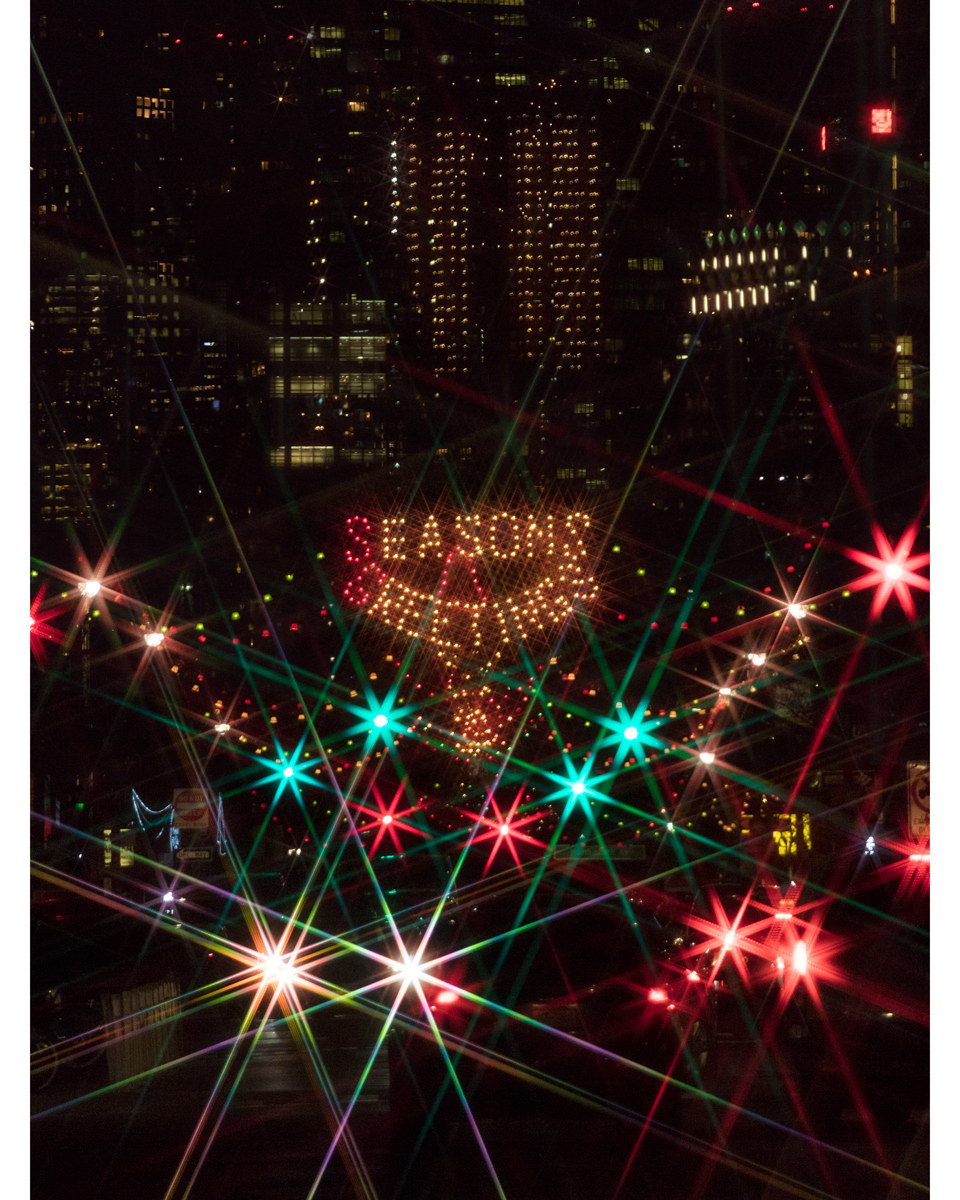
I grew up in a household where my mom is Jewish and my dad is Catholic. I was raised as a Unitarian Universalist — you know, the ultimate left-leaning, absurdly liberal religion. So I feel that looking at all the optics of the holiday season objectively is somewhat easy for me. Christmas in particular, it’s just so garish and funny and overwrought. It doesn’t look like any other time of the year, and the tropes are just so loud and extreme. It’s just a really fun palette to play with. The rush up to this big celebratory moment is just so hilariously frenzied and congested, but the madness is its own kind of tradition, and I have my own romantic memories of that.


When did you stop believing in Santa Claus?

It was either 3rd or 4th grade. I remember seeing my mom balancing her checkbook at the kitchen table and going through all these receipts from the holiday season. And I remember seeing a receipt that was for something that was distinctly a gift from Santa, like, the gift. The one we opened last. I looked at that receipt, and then our eyes met. And she just said to me, “Don’t tell your brothers.” The most indirect but direct way to say that “this isn’t real, but we’re going to preserve the tradition.”

Whose work did you look to the most? Who was doing the most important work for you at that time?

A big influence early on was looking at photography that now has the moniker of being called “cursed photography”: abandoned Flickr accounts and Photobucket accounts full of loose ends of people’s memories. There was a really prolific Tumblr called “internet history” that was curating exhibits of these found, vernacular photos of the digital age. Dis Magazine was the next step from that, and I’m still a huge fan of David and Solomon, two of the founders who have since become Torso Solutions. I’m obsessed with the idea of taking everyday, pedestrian concepts and extrapolating them to the degree that they almost become foreign and alien. Brad Troemel and the Jogging were big influences early on too.

I didn’t have any education in photography at all, but as I’ve learned more and more I’m fixated on artists who illuminate the absurdity of the domestic life I was raised in. I’ve always loved the work of Eva O’Leary, Chris Verene, Thomas Mailaender, and Erik Kessels, to name a few.


Chris Maggio 
 

Portland-based photographer Will Matsuda put it really well when he said in an interview that the Chris Maggio "worldview" is so distinct. I feel like the current pandemic couldn't have made it any more...surreal. In a way, it's like the issues that the Onion had with the Trump presidency; how do you spoof something that seems to be constantly spoofing itself? What has it been like photographing in the surreality of the last year?

It's been a really difficult challenge. It’s sort of stymied me a little bit. I think that photographers have a lot of fun needling the absurdity out of everyday life, trying to see something that others overlook, but the pandemic has laid everything bare. I think it’s a golden age for photojournalism, and there’s been so much incredible work on that front this year. For photographers like myself who are a little bit more conceptual, it seems like a time to take a backseat and think about our practice. Everything is so literal right now; it doesn’t feel like there’s a second layer to uncover visually.

I’ve been shooting a little bit but struggling to make something that speaks to something beyond the pandemic. The images that I take right now, I don’t know if I want all of them to have masks in them or plastic-wrapped cashiers or weird shanties outside of restaurants. I think time will tell what to make of all this — hindsight is 2020.


Folks seeing your Christmas images for the first time will get that this isn't an endorsement of the holiday. I'm not trying to goad you into acting the Grinch, but what do you want people to consider when they look at these holiday photos?

It should encourage people to think about the mechanisms and stories surrounding the holiday. The “Santas on Vacation” story for the Times is a really good example. Labor for the holidays is a year-round job, and the type of people who end up working in the [holiday] industry are fascinating. For Santas, specifically, it’s a time for senior citizens to shine. As you get older, your place in the workforce starts to erode, but … as a Santa, especially as a real, bearded Santa, which is like the top-tier position in the world of Santas, being a senior citizen is an advantage. It’s a job that you grow into as you age. That’s something that I had never thought about before, just the fact that the talent and the type of person that it takes to put the holiday together is so specific, and it’s only for that one month out of the year. I don’t want people to think of the photos as ugly or condemning; it’s about getting people to think objectively about the traditions surrounding the holidays.

Chris Maggio 
 

There’s a lot of shadow planning, or things that happen before the day, like the parking garage decorations that nobody notices but still take work.

To me, that’s the most endearing part. I love the fact that the staff at the garages, they all get together to decide who’s going to decorate and what’s going to be the aesthetic of it. Some of them go all out. There’s one garage on the Upper East Side that does a whole miniature village in it. It’s a type of creativity that you don’t see at any other time of the year. Like the houses in Staten Island or Dyker Heights that are famous for doing these insane light displays — for the mom or dad or whoever is decorating the house, that might be their only creative outlet for the year. It’s a kind of folk art, a creative voice that they may not even think about; it’s just an impulse.


Chris Maggio

You are still enamored with the things you photograph? You’re not disillusioned?

I’m not disillusioned. I take photographs of things that I love — things that help put me in touch with or challenge who I am as a person. Real life to me is the moments in between the big moments, the losses and the triumphs. I think, if anything, the whole COVID debacle has made us more aware of that in a way. What I’m going to remember the most about all of this is just the slog of everyday life and the ways in which that’s important. Running the errands, cooking, all the stuff in between. I want people to think about the simple routines and ridiculous habits in our lives and how those define us. It’s the whole arc of our lives, and it’s OK to laugh at that sometimes.


Chris Maggio

Are you planning on trying to get out and photograph this year?

I’ve done quite a bit of photographing the holidays in the past, so I don’t know if I’ll go out and do a full piece this year. I’ll definitely be shooting a little bit. I’m more interested in what comes next. There’s no stopping holiday tradition. Yes, we’ll see plenty of funny images of Santa behind plexiglass this year, but I’m curious how our traditions will be reformed in the wake of seeing how fragile they really are. 

Chris Maggio 
 

How are you spending the day this Christmas?

Just spending the day at my apartment and catching up with my folks remotely. My parents both work in public schools on Long Island, so we're trying to figure out a way to do something safely in person at some point, but it's proving to be tricky. I've seen people covering themselves with plastic painters tarps to hug one another, but that seems a little extreme to me. Maybe we'll bundle up and eat a meal on the porch.  Share this article.


---------------------------------------------------------------------------------------------------------------------------

PHOTOGRAPHY FREEBIE:

How to make money with your Photography even if you're not a Pro.

Copy & paste this link into your browser, click ENTER, and enjoy: 

https://mrdarrylt.blogspot.com/2020/01/how-to-make-500-month-from-your.html

                                                         or

https://www.photography-jobs.net/?hop=darryl54

 -----------------------------------------------------------------------------------------------------------------------------

Visit me on Facebook and post your pictures.

https://www.facebook.com/Darryl-T-363867387724297/ 


Tuesday, December 22, 2020

InstantKon SF70 instant camera is a Polaroid SX-70 on steroids

by  


The legendary Polaroid SX-70 was invented nearly half a century ago. And in 2020, MiNT is introducing the modern version of the iconic instant camera. InstantKon SF70 takes the best from the retro SX-70 and combines it with modern technology. You get the same instant photo experience, but with full manual control and a couple more improvements over the Polaroid SX-70. So, let’s dive in and see what the InstantKon SF70 has to offer.


When MiNT imagined the camera they wanted to make, they realized that it would have to contain the best features of the SX-70,” but also be better than it in some key areas. “Otherwise, it has no reason for being,” the company writes. So, they took the foldability and portability of the SX-70, its focus control, depth of field, and the square film format. And then they added built-in flash, shutter speed control, and aperture control.

The closest focusing distance is 75cm (29.5 inches) and the widest aperture is f/5.6, going up to f/22. You can also adjust the shutter speed and set it between 1s and 1/500s. There’s also Bulb mode that goes up to ten minutes. Some instant camera light painting, anyone?

ND filters are also available for the SF70, so you don’t over-exposing film in bright sunlight. Speaking of film, the SF70 uses Fujifilm Instax Square.

  Here are the full specs:

  • Apertures: f/5.6, f/6.7, f/8, f/11, f/16, f/22
  • Lens: 3-element lens with glass, aspherical lenses, f=93 mm, EFL (Effective Focal Length) (35mm equivalent: 50mm)
  • Coating: Multi-layer coated
  • Focusing distance: 0.75m (29.5 inches) – ∞ (manual focus)
  • Depth-of-field (@ 0.75m and f/5.6): 4.9cm (35mm equivalent: f/2.4)
  • Shutter speed: 1/500 – 1sec (A mode), B mode – maximum 10mins
  • Viewfinder: Real image viewfinder, 0.44x
  • Exposure control: AUTO, A+1, A-1, B, R-flash, 1/500, 1/250, 1/125, 1/60, 1/30, 1/15, 1/8, 1/4, 1/2, 1, OFF
  • Flash: Built-in electronic flash with auto-brightness balance
  • Multiple exposures: Yes, unlimited times
  • Film: Fujifilm Instax Square Film
  • Adapters: Cable release socket, tripod mount socket, neck strap eyelets, and 2.5mm audio jack
  • Battery: 2 AA Alkaline batteries (included)
  • Warranty: 5-years

And here are a few sample photos by Antony Hands & Sébastien Poirier

InstantKon SF70 is currently available through Kickstarter, and it’s doing quite well: $135,411 has been pledged of the $32,245 goal, and there’s nearly a month still to go. The camera sure seems like something worth owning, but note that it’s not cheap like most other instant cameras. The Early Bird price is $846 for the camera alone, and you can get a bundle with filters and film for about the same price if you make the pledge super-early. The official retail price will be $891 for the camera alone.


How to help buyers easily find your commercial photography

 Tags: Photography for Beginners, SEO


by: Feature Shoot

In the last few years, Google Images has implemented multiple changes to help photographers sell their work through the search engine, from adding image rights metadata to specifying Licensing information for potential buyers. Heading into 2021, search engines remain one of the most important ways for photographers to market and promote their images, but many still overlook the significance of SEO (search engine optimization).

SEO is a complex, multi-billion dollar industry, but for photographers, it’s relatively straightforward. Without relevant keywords, titles, and more, your marketable work could get lost in a sea of content; on the other hand, optimizing your images can boost your discoverability and help you get your work in front of the right buyers. Here are four simple steps you can take to give your licensable photos a competitive edge and increase your portfolio’s chances of surfacing in image searches. 


Use concise, descriptive titles

Search engines rely on bots to scan and discover content relevant to search queries, but they’re much better at recognizing words than they are at identifying pictures. For that reason, the titles of your images are essential when it comes to surfacing your content; according to Getty Images, titles are one of the most heavily weighted factors for search engines.

Titles should be literal, straightforward, and descriptive; include concrete, concise information about the who, what, where, and why of your image. Don’t be afraid to get specific either; for the image above, “Young woman among wildflowers in the mountains at sunset” works well as a title because it pinpoints the location, time of day, and age of the subject.

Getty Images recommends touching on the primary and secondary subject of your photo; tangential subjects aren’t relevant enough to be included in your title. Their test data further reveals that the optimal length for image titles hovers around 40 to 60 characters, though anything longer than 55 characters will be truncated with ellipses in search results.

Finally, remember to use unique titles for each photo; while images from a single shoot might share general similarities, titles are one way to get granular and specific about the activities, scenarios, and emotions that make up individual pictures. If you’re uploading the same image to multiple commercial stock photo distributors, give it a unique title on each platform to maximize its chances of being found.

Add descriptions

Descriptions aren’t weighted as heavily as titles, but they can prove invaluable; research from Getty Images suggests that files with unique 50-word descriptions receive 8% to 15% more search engine traffic than files without descriptions and those with shorter or longer descriptions.

In your Licensing portfolio, descriptions give you the chance to go into more detail about the image than you would in a title; for these, you can mention factors like time of day, season, location, image style (aerial, flat lay, etc.), and much more. This is also a place where you can take advantage of your conceptual keywords and describe the mood, feeling, or idea behind the image. Make a list of some terms buyers might search when looking for an image like yours, and include the most relevant details in your description.

Apply relevant keywords

When it comes to SEO, keywords are king, so don’t skimp on this part of the process. Whether you’re uploading images to your website or a stock agency or distributor, it’s a good idea to add 10 to 30 relevant keywords to your photos. Ideally, these keywords will include a mix of literal terms—who, what, where, and why—and conceptual terms that capture the feelings or ideas conveyed in the image.

Most stock agencies and distributors have a keyword suggestion tool; these are helpful to start, though you can pick and choose which ones to keep, add your own, and remove any that aren’t relevant to the image. Additionally, there are tons of online resources for generating keywords, from Keyword Tool to ahrefs and beyond.

It’s also good practice to start compiling your own list or spreadsheet with your most commonly used keywords and ideas for future shoots. You can always browse top-selling images on 500px or Getty Images for inspiring keywords to implement in your own work. When keywording your files, you can include details like time of day, background color, location, as well as the number of models, their ages, what they’re doing, and more. You can also incorporate some of these trending keywords for a timely twist.

While it’s important to include a variety of appropriate keywords, from literal to conceptual, remember to avoid “spamming” your files with too many or unrelated keywords. Keyword spamming makes for a bad user experience, and search engines are getting better at detecting it.

Share your work

500px and Getty Images market and promote the images on their platforms, but today’s commercial photographers also serve as their own PR professionals. One of the best things you can do for your Licensing portfolio is to get it out there and in front of people; share your newly uploaded shots on your website and all your social channels, with links to where people can buy your images.

For more visibility, add trending hashtags related to relevant and enduring commercial themes like environmental sustainability, wellness, and technology. It can help to use a tool like Display Purposes to generate unique and popular hashtags for your work. Other tools like Iconosquare and Planoly can also help you schedule your social media posts, so you can plan out your week in advance.

While SEO can seem daunting, it’s an integral part of building a commercial photography portfolio, especially in a competitive market. “Optimizing your content to be found simply means including as much important information related to your photo in all available fields,” the 500px Content Team explains. It all boils down to finding a metadata workflow that suits your schedule and business needs; fortunately, today’s image management tools and AI capabilities make the process simpler and more efficient than ever. You spend time making your photos the best they can be, so it makes sense to give them an advantage using SEO.  Share this article.


Sunday, December 20, 2020

Portland photographer’s vintage pictures make people ‘less sad for what they’ve lost’

 Tags: Photography for Beginners, Vintage pictures, Portland Maine, John Duncan


PORTLAND, Maine — When John Duncan, 69, starts spinning stories, there’s no telling where he’s headed. Duncan tends to ramble but it’s only natural. Having lived an extraordinary life of travel and adventure, he’s earned the right.

Many of Duncan’s best tales flow from the thousands of pictures he’s made throughout his nearly seven decades. He’s been all around the world, worked more jobs than he can accurately count, seen amazing sights — and has the photographs to prove it.

But as a photographer, Duncan is best known for the simple, black-and-white images he made at home, on the streets of Portland in the 1970s. In recent years, Duncan’s been combing through his archives, scanning old negatives and posting them online. The positive response has been intense as his pictures transport viewers back in time, to a city that no longer exists.

“People stop me on the streets and say, ‘Hey you’re the guy who posts all the old pictures of Portland, I love those,'” Duncan said.

He has posted hundreds of his photos in the “Portland Maine Encyclopedia of the 1960s, 70s, & 80s” Facebook group, garnering enthusiastic responses from its nearly 16,000 members.

“The extent of his documentation of life in 1970’s Portland is mind-boggling and we are the beneficiaries” said Bonnie Blythe, a group co-founder. “He is also beautifully skilled and so humble.”

Duncan’s 70s photos are not epic. They’re the opposite. Rather than depicting news events, protests or disasters, they illustrate simple, daily life. In his image collection, there’s long-haired young men playing guitar in the park, pals drinking beer in a now-retro apartment and mechanics working on once-ubiquitous Volkswagen Beetles.

Back then, Duncan shot almost anyone that got in front of his lens, including friends, strangers, random street scenes and even what he could see in his car’s rear view mirror.

One of Duncan’s best-loved photos is of two ladies, one dressed dark and the other light, walking on what looks like a collision course, down Congress Street in front of the long-gone State Drugstore. Since posting it to Facebook, the image has inspired dozens of comments and shares.

“I believe the beauty salon on the second floor was my grandmother’s,” wrote one commenter, which prompted many responses about whose relatives were customers at the salon.

It’s typical of Duncan’s online photos. They often prompt long strolls down memory lane, uniting the collective memory of Portland’s displaced diaspora.

“Love this, remember it well — and the corner it was on,” wrote another member of the Portland Encyclopedia group. “Oh, to have those good ol’ days back. Sigh.”

People recognizing themselves or relatives in his vintage pictures, too, often get in touch with Duncan, asking for prints. He’s happy to oblige.

“I posted pictures of a guy throwing pizza dough and someone wanted a print. They said it was their father and he’s 70, now,” Duncan said. “They gave me a bottle of whiskey for it. That was good.”

Another one of Duncan’s more well-known pictures is of a striking, freckle-faced girl selling lemonade in the West End. Since it hit Facebook, he’s been contacted by the now-grown woman and her children.

Duncan still has old treasures he’s yet to unearth. He estimates he’s only gone through about three-quarters of his negative archive.

“And everytime I go through them, I find something I missed before,” he said.

Duncan’s first camera was a gift from his father in middle school. Since then, he’s only rarely been without one.

“Scenery has never interested me,” he said. “It’s always been about people, humans.”

Portland photographer John Duncan shoots pictures while Bob Bergeron works on his mural at the new Amistad Mark Perry Center on Forest Avenue on Dec. 4, 2020. Credit: Troy R. Bennett | BDN

Duncan’s biography reads like the plot of an unbelievable action-thriller film. It makes the popularity of his vintage, hometown photos more remarkable.

Growing up in Falmouth, Duncan set a state high school track record, running the mile. He then went to Woodstock in 1969 and hitchhiked to San Francisco and back. He spent nine months in the Air Force during the Vietnam War before talking his way out, convincing higher-ups he wasn’t cut out for military life, earning an honorable discharge in the process.

Duncan lived in Sweden for a decade and met his wife there. He’s had numerous careers, including oil rig roughneck, long-haul trucker, cabbie and photocopier repair man. He also sold cotton candy from a circus train and did nude art modeling in Maine, as well as Europe.

He’s never worked as a photographer, though. His output is all self-motivated.

Duncan’s retired now but still spending a lot of his time photographing Portland and its people. You’ll see him cruising around town on his bike, in a high-viz vest, camera slung around his neck, talking to everyone.

“What really feels satisfying to me is getting close and interacting with people, if I can,” he said.

In warmer months, he sits at sidewalk cafe tables with an antique, folding camera. When passersby ask about it, he demonstrates by taking their portrait — adding them to his photographic pantheon of local characters.

University of Southern Maine Professor Libby Bischof, who teaches a course on the history of photography, thinks Duncan’s pictures are important markers of time and culture. Bischof knows exactly why his photos are so popular online, too.

“I name that phenomenon nostalgia,” she said. “One of the appeals of photography is that it allows us to see what can no longer be seen. We see the people we once were and the places we can no longer go.”

Duncan’s photos are akin to hometown poet Henry Wadsworth Longfellow piece, “My Lost Youth,” she said.

Its first stanza reads: “Often I think of the beautiful town that is seated by the sea; Often in thought go up and down the pleasant streets of that dear old town, and my youth comes back to me.”

Bischof thinks Duncan’s informal street photography and portraits of friends are particularly powerful because everything is in context. Most of his images are loosely framed, including detail-rich backgrounds to luxuriate over. You can’t get that from a more formal kind of picture taking where everything is set up perfectly, with nothing extraneous in the frame.

She also reckons Duncan’s pictures are a kind of memorial balm. Bischof hears a lot of bitterness from old-timers about how Portland has changed — how they no longer recognize it. But Duncan’s pictures somehow make them feel better.

“Getting old ain’t for the faint at heart but I’m really enjoying all the pictures — brings back some great memories,” one commenter wrote in a long Facebook thread reuniting old friends for the first time in years — while they compared the chronic illnesses they were fighting. “Please keep up the great work.”

Sometimes remembering what came before is an exercise in pain but not with Duncan’s pictures.

“The emotion is different,” Bischof said. “With his photos, people are less sad for what they’ve lost and more happy about what they had.”  Share this article.


---------------------------------------------------------------------------------------------------------------------------

PHOTOGRAPHY FREEBIE:

How to make money with your Photography even if you're not a Pro.

Copy & paste this link into your browser, click ENTER, and enjoy: 

https://mrdarrylt.blogspot.com/2020/01/how-to-make-500-month-from-your.html

                                                         or

https://www.photography-jobs.net/?hop=darryl54

 -----------------------------------------------------------------------------------------------------------------------------

Visit me on Facebook and post your pictures.

https://www.facebook.com/Darryl-T-363867387724297/