Friday, April 24, 2020

5 Uncomfortable Truths About Photography

There is a lot of hype about photography, it’s a booming hobby practiced by huge numbers of people around the world. With the prevalence of high quality images from our phones, and widely available, inexpensive dedicated cameras, it’s no wonder the art is so popular. But it isn’t all roses, and there are some uncomfortable things it’s best just to understand from the beginning.
Here are five truths about photography:
AK-NoatakPreserve-KellyRiver-1083-320

1. More gear won’t make you a better photographer

Don’t get me wrong, I love camera gear. New bodies, lenses, and accessories are fun and exciting, but they won’t magically make you better at photography. To be a better photographer you need to learn how to find images. The gear can help you capture them, but the finding part is up to you.
Whenever I’m thinking of buying a new piece of gear, I ask myself, “Is my current gear holding me back?” Sometimes the answer is yes. It could be that the lens I’ve been using for night photography is too slow to get the detail I need, or the limitations of my current body are preventing me from blowing up the final shot to the size and detail required by a client. In such cases, I almost always have a specific image that I want to make, but can’t, due to my equipment.
More often though, the answer to whether my gear is holding me back is no. The actual reason I want a new piece of gear is that it is shiny. I may lust over new camera stuff, but if that gear won’t improve my photography in a very tangible way, I don’t buy it.
Some images require certain equipment. Without a big telephoto, this shot of the full moon over the Andes would have been impossible.
Some images require certain equipment. Without a big telephoto, this shot of the full moon over 
the Andes would have been impossible.
Remember that good photography comes from your heart and your mind, not your wallet.

2. There is no “knack”

AK-NoatakPreserve-KellyRiver-1083-469
Some people take to photography quickly, others more slowly, but everyone has to learn. Photography is an art, not a gift.
A few times, I’ve been told by people looking at one of my images, “You have such a gift.” I know they are being kind, that they are offering a compliment, but I can’t help feeling insulted. I want to say, “It’s not a gift! I worked my ass off to make that image! That shot is the result of years of effort, of early mornings, and hours of travel, of study and practice, tens of thousands of failed and deleted shots, and thousands of dollars in equipment. Nothing about that image was given to me, I earned it.”
Of course, I don’t say that. Instead, I smile as though they’ve just said the nicest thing, and say thanks.
AK-WragellStEliasPark-NabesnaRoad-July2006-10
Photography can be learned. With practice you can see the way lines and light interact to create a pleasing image. Or how those elements can become jumbled, resulting in a photo that just doesn’t work. With time and effort, you get better at recognizing the difference. It’s a process I work on every day.
So no, photography is not a knack – it’s work.

3. You’ve got to be patient

I spent 20 minutes hand holding a big lens to make this image, as I waited for an albatross to turn in profile over the waves.
I spent 20 minutes hand holding a big lens to make this image, as I waited for an albatross to turn 
in profile over the waves.
Yeah, lots and lots of patience.
I’ve guided hundreds of photographers into wild locations to make images. Sometimes we’ve arrived at a site, and the light has been perfect, or the wildlife is waiting in the perfect place, as though they’d been staged there. But that is rarely the case. More often, we have to wait, and wait… and wait.
The pages of magazines are filled with spectacular images, timed to perfection. But those didn’t just happen. The images were made because the photographer knew how to be patient.
Few things are so hit and miss as photographing the aurora borealis. (There are lot of misses.)
Few things are so hit and miss as photographing the aurora borealis (there are lot of misses).
The best images all require time and effort.
This is a hard reality for many of my clients (students) to swallow. They just want the photo to be there, though it rarely is. To be honest, I’m not very good at patience. I like to move and explore, but it’s the times where I force myself to wait and sit silently, that I often walk away with something good.

4. There is nothing wrong with being an amateur

AK-BrooksRange-BairdMtns-aerial-31Jul-12
Being an amateur does not mean you are any less talented than a professional photographer. In fact, in many cases, I’d say it is just the opposite. You see, professionals spend much (most even) of their time doing the dirty work: invoicing, marketing, tip-tapping away at the computer, and much less time actually making and working with images. The images we professionals shoot are often those made for clients, not those we make for ourselves. Inherently, photos made for others are not as good as those we are passionate about. Amateurs can shoot whatever they please, and that means they are making photos that matter to them.
Skill and artistic sensibilities are not the sole territory of professionals. Some of the finest photographers I know do not make their living from it.
AK-ANWR-Kongakut-108094-731
And equipment! Here is the biggest irony: pros often can’t afford the latest and best gear. With the exception of the very top people in the industry, we pros aren’t millionaires, or anywhere close. Out of our meagre incomes have to come our mortgage, food, computers, software fees, travel, and yes, camera equipment. When I made the transition to full-time freelancer, that new reality hit me like a falling piano. Science fiction writer John Scalzi once wrote that you shouldn’t consider leaving your day job until you are making TWICE your normal income with your writing (or in this case photography). It’s good advice.
So yeah, there is nothing, NOTHING wrong with being an amateur.
AK-GAAR-AIR-1073-615

5. Postprocessing is a tool, not a crutch

I’m not the first to say it, but I’m going to repeat it, there is no un-suck filter. If your image stinks when it goes into Photoshop or Lightroom, it’s going to stink when it comes out, no matter how much you crop it, add contrast, or saturate.
This image took a lot of work in post-processing, but it was a solid image going in. Nothing in Lightroom will make a bad image good.
This image took a lot of work in post-processing, but it was a solid image going in. Nothing in 
Lightroom will make a bad image good.
For the love of god, don’t over-process your images. What matters in an image is the way it speaks to the viewer, that the photo means something. Make your image meaningful, and you won’t ever have to rely on post-processing to be successful.

Sunset over the Noatak River, Gates of the Arctic National Park, AK USA.


In the end, what really matters about photography is not the final image, but the process of making it. So forget about the shiny new gear, practice the art, be patient, don’t get caught up in labels, and make your best image in the camera. Everything else is details.
Do you have anything else you’d add to this list? Please share in the comments below.

Share this article.

Thursday, April 23, 2020

How To Ditch Your Stash Like a Pro

Viral video - Cell phone video, Inspiration for you videographers considering a topic for your next project. 1,375 views on Facebook. Your video may receive more.


The Smartphone Filmmaking Handbook: Revealing the secrets of smartphone movie making
   Get your copy here: https://amzn.to/3b76mGJ

(Pssst...as good a deal as this is at only $7.99, how would you like to have access to the Smartphone Filmmaking Handbook absolutely FREE?  Just scroll down to the bottom of this page and click on the Amazon Kindle Unlimited Access offer)


10 Step Guide to Improving Your Photography Without Buying New Gear

Will buying that new camera or lens or travel to iconic places automatically result in beautiful images?
Landscape photographers often dream about the latest gear or traveling to far away places to capture great images. For example, places like Iceland, Patagonia, Lofoten Norway, or Tuscany. The problem is that we spend too much time in front of our computers seeing all those great images on social media platforms and dreaming about photographing those vistas ourselves.
10 Step Mini-Guide - How to Improve Your Photography Without Buying New Gear - leading lines
We believe that going to iconic places or buying the latest gear will automatically make us better photographers, or that this is the only way of capturing great imagery. As with any craft, you need to practice, practice, and then do some more practice. This way you’ll have the greatest possibility of taking that fantastic photo, either close to home, or once you finally go away on that travel adventure of your dreams.
Here are my 10 tips for how to improve your photography without buying new gear:

1) Learn the basics about your camera and photography

Start by reading your camera’s user manual. Yes, it’s very basic and should be obvious to everyone, but you would be surprised how often people buy a new camera and start using it right away, thinking that the camera is going to do all the work. Many camera stores also offer beginner courses. Ask your local camera store about this option before deciding to buy from them.
Learn about topics like leading lines, the rule of thirds, exposure compensation, and the relation between aperture, shutter speed, and ISO. I will not go into this in more detail as it would merit a whole book, but these topics are available in printed books, e-books and here on dPS.
Read more here:
10 Step Mini-Guide - How to Improve Your Photography Without Buying New Gear - leading lines
Using leading lines.
10 Step Mini-Guide - How to Improve Your Photography Without Buying New Gear - rule of thirds
Using the rule of thirds.

2) Do your photography under the right conditions

A word photography literally means drawing with light (from the Greek photós meaning “light”, and graphê meaning “drawing, writing”). I would say that at least 80 % of your most successful images will be taken during the sunrise or sunset when the quality of light is the best. The other 20 % will be taken during cloudy days when the light is much softer than days with direct sunlight.
Many photographers don’t consider this second aspect enough. When starting out, I would often photograph during sunny days with clear blue skies with hard light that produced too much contrast. Today I try to do as much photography when there’s a shift in the weather pattern from high to low pressure or vice versa. The reason is that during this period there’s often a build up of dramatic clouds and the weather shifts between rain and sun creating more drama in your photos.
I suggest that you regularly check the weather forecasts and try to plan your photography for these days.
10 Step Mini-Guide - How to Improve Your Photography Without Buying New Gear

3) Scout for new locations and return multiple times to the same place

The majority of my best photos are from places very close to home. Most of the time they were not taken on my first attempt, but rather I had to come back many times to the same location before the conditions were right.
Google Earth is a great tool for your initial location scouting as are social media platforms like 500px, Instagram, or Google+. Remember that you should use these sites for inspiration, and not try to copy the same images that have already been taken numerous times before.

4) Change your vantage point

Have you ever considered the vantage point of your photos? The majority of photographers always take photos from the exact same position as they are standing – at eye level. This creates boring photos that all look the same. It’s also the same vantage point from which your viewers see the world.
By crouching down low or shooting from a higher position, like a hill or even from the top of a rock, it will drastically improve your photos. The visual appearance of your photo can dramatically change by just placing your camera a couple of meters in another direction. You should “work the scene” by looking for different viewpoints and not be satisfied with your first choice.
10 Step Mini-Guide - How to Improve Your Photography Without Buying New Gear - low viewpoint
Taken from a low vantage or view point.
10 Step Mini-Guide - How to Improve Your Photography Without Buying New Gear
Shot from a low view point.
10 Step Mini-Guide - How to Improve Your Photography Without Buying New Gear
Taken from a high vantage point.

5) Use your lenses creatively

Use your wide-angle lens for creating depth in your image and your telephoto lens to compress the landscape. Both techniques are very effective and create totally different effects. By trying to pre-visualize how your want your photo to look, your choice of lens will be much easier. This takes time and comes more naturally as you gain greater experience.
For landscape photography, you often want to maximize your depth of field by taking photos between f8 and f/16. You could go higher than that but then you risk having softer images as most lenses have a “soft spot” between these parameters.
You could also try to zoom or move your lens during the exposure. This technique is more a trial and error basis and often you need to take many photos before you’re satisfied. Luckily all your frames in digital photography are free.
10 Step Mini-Guide - How to Improve Your Photography Without Buying New Gear
Use of a wide-angle lens.
10 Step Mini-Guide - How to Improve Your Photography Without Buying New Gear
Use of a longer or telephoto lens.
10 Step Mini-Guide - How to Improve Your Photography Without Buying New Gear
Created by intentionally moving the camera or lens during the exposure.

6) Use the elements in your surroundings to your benefit

Is there is a rock, a tree, strong colors, some leading lines, etc., that you can use to create interest in your image and lead the viewer’s eyes throughout your image?
Because we are fed daily with thousands of images, it becomes important to immediately catch the viewer’s attention and make sure that their mind is stimulated. Therefore, the image should have a clear object, this could be a person or a landmark, which the viewer can quickly identify.
If the photo is too busy with too many conflicting elements, the viewer will become confused and move on to the next image. Less is often better than more. Consider excluding elements that do not add to the image. It could be annoying things like tree branches entering the photo from the corner, paper bags and other waste in the photo, etc.
10 Step Mini-Guide - How to Improve Your Photography Without Buying New Gear

7) Invest in good quality accessories instead of buying the latest camera or lenses

There are some camera accessories that are more important than the latest camera or lens.
The single most important one is a good quality tripod. You should not waste your money buying a cheap aluminum tripod that will shake every time you put your camera on it, resulting in useless blurry images. In the end, you’ll be forced to buy a more expensive tripod anyway, adding unnecessary extra costs. Instead, spend the extra money on a quality tripod from Manfrotto, Gitzo, 3 Legged Thing, or any of the other top brands. Trust me, in the end, you will end up saving money.
Another very important accessory for us landscape photographers are filters. You definitely need a good polarizing filter to reduce the reflections on water and other shiny surfaces. Polarizing filters work the same way as your sunglasses.
https://www.digitalphotomentor.com/?s=challenge
Cameras are also limited in their ability to handle dynamic range. In short, this means the ability to register the darkest and lightest tones and everything in between. An example of this cis when you’re photographing a landscape and the foreground looks good, but the sky is too bright. This is where the graduated filters come into play. They have a dark and light part with a soft or hard transition in between. Generally, you should use a hard transition filter when photographing seascapes, as there is a clear definition between the sky and the water. A soft transition filter is preferred when photographing landscapes where there are trees, hills or mountains.
I’ve tested many different brands and would highly recommend LEE filters, They are expensive, but in my opinion are worth every penny. Lee also produces two neutral density filters called Little Stopper and Big Stopper. These filters enable you to slow down your shutter speed. When you see those photos with silky smooth water or clouds, most likely the photographer used such a filter.
https://www.digitalphotomentor.com/?s=challenge
While these accessories will cost you some money, they will be more of a one-time expense. Taking good care of them means you can use your accessories for many years to come.

8) Photograph in RAW format and learn to use a photo editing program

When photographing in JPG mode you let the camera do all the processing of the image. This means you have less control over the final outcome. It’s better to photograph in RAW format and then use a software like Adobe lightroom to post-process them yourself.
For me, the main reason for shooting in RAW is to have a greater dynamic range so that I’m able to save many images that are otherwise too light or too dark. Of course, it’s important to get the exposure correct from the start, but RAW files definitely give you some room for errors. There is a lot of information about RAW format and post-processing, read;  RAW Versus JPG – Why You Might Want to Shoot in RAW Format and How to Use Adobe Camera Raw and Photoshop to Make Your Landscape Images Pop.

9) Learn to focus manually

This is crucial for landscape photography. As mentioned above, you’ll hopefully be taking most of your photos in low light during the morning or evening. You will also be using a tripod to avoid camera shake.
10 Step Mini-Guide - How to Improve Your Photography Without Buying New Gear
During long exposure photography, it becomes very important to focus manually in order to avoid having the focus move during your exposure as is the risk when using autofocus. You should use a small aperture like f/11 and focus about a third of the way into the scene if you desire to have sharpness throughout the frame. Make sure you use your camera’s Live View mode or focus peaking if you own a mirrorless camera, for manual focus assistance.

10) Think before you shoot and study your photos afterward

Often I see photographers arrive at their location, take out their gear, and do the “machine gun “photography approach, taking dozens of photos from the same location over and over again. It’s important to work the scene, moving around looking for the best viewpoints.
The same applies when you’re done editing your photos at home. Try to study your photos and look for improvements. Compare your work with other established photographers to see how you can do things differently next time. This takes time, but after a while, you’ll certainly notice better quality in your work.

These 10 points are just the very basics to get you started. Make sure you search dPS for more information, study photography books, and feel free to leave a comment below or ask any question you might have. Good luck!

5 Pieces of Photography Gear to Consider as Your First Upgrade

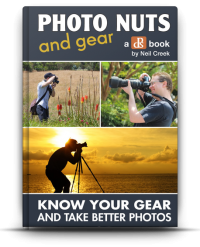
Neil Creek is the author of the ebook Photo Nuts and Gear. In this post he offers some advice to the beginning photographer about the first upgrade they should buy for their camera.
So you’ve been getting into this photography thing pretty seriously ever since you bought that “good” camera you wanted. It turns out that you really enjoy photography, and you think you’ll be doing it for a while. You want to know what cool camera gear is out there, and you know there’s a lot, but what should you get first?
Where to start on the photography gear upgrade trail

When you’re just starting your photography journey, it’s intimidating how much gear there is and how much it costs. It’s obvious that some photos are impossible without certain gear, and sometimes it’s not obvious when gear has helped a photo.
I’ve been shooting and helping new photographers to get the most out of their gear for years, so I have a few suggestions for great first investments in photography to suit your varying interests and budget.

1. A 5-in-1 reflector

5in1reflector
Light is everything in photography, but sometimes you can’t quite get the right kind of light where you need it. A great example is outdoor portraits. With the light predominantly coming from overhead, there are often dark circles under the eyebrows. A reflector can be used to reflect some light back up into the face of your subject to fill these shadows.
A 5-in-1 reflector is cheap and very versatile. Built around a collapsible steel ring spanned by diffusion material, it has a reversible cover with four different surfaces. The diffusion material inside is great for turning full sun into bright shade, for small and macro subjects as well as head and shoulder portraits. I’ve even used it as a flash diffuser in a pinch. The cover has three reflective surfaces: white for gentle fill, silver for strong fill, gold for a warm strong fill, and a black surface for eliminating light to bring shade back to a scene which is too evenly lit.
This is an incredibly versatile tool at a very affordable price, and it neatly fits into the “laptop pouch” in camera bags which have one. This item should be in every portrait photographer’s kit.
Who is this for: photographers on a budget who shoot in natural light
Approximate cost: $20-50 depending on size
creek-130310-051

2. The Nifty 50 lens

Lenses are a critical part of the optical system that creates the photographic image. Unfortunately almost every lens choice is a compromise between price, speed, image quality and more. Plus, lenses are expensive!
creek-131028-048
There is one lens however that is possibly the best of all worlds: the 50mm prime, also known as the “Nifty 50”. Several lens makers have their own or similar versions of this lens, but the most famous is probably the Canon 50mm f/1.8. This lens is small, fast (thanks to its wide f/1.8 aperture), tack sharp and extremely affordable. If you are looking for an excellent portrait lens that will take well exposed photos in low light, it’s hard to go past the Nifty 50 especially if you are on a budget.
These lenses aren’t without their weaknesses of course: cheap plastic body construction keeps the price and weight down, but negatively affects the durability; weather sealing is also thus not an option; it is notoriously slow to focus in low light; there’s no image stabilization; andthe focus ring is very small. Despite all this, it is hard to resist the appeal of professional level image quality, at a hobbyist price.
Who is this for? Anyone looking for a high image quality, fast, small lens on a budget
Approximate cost: $100-200 depending on brand


3. A good solid tripodcreek-131031-028-Edit

Photographers are always limited by the amount of light, and without adequate amount, you are forced to make compromises with your settings. When you have to use a slower shutter speed you risk getting blurry photos from camera shake. A tripod fixes that. By providing a stable platform you can almost eliminate camera movement from short, to incredibly long shutter speeds.
Not only does a tripod fix the problem of a shaky camera, it opens up whole new photographic and creative opportunities. Seven of the eleven special effects photography techniques discussed in my ebook Photo Magic use a tripod. A Tripod is possibly the most versatile piece of photography equipment you can buy. You will be able to try photos and techniques otherwise impossible.
Buying a tripod can be like walking through a minefield however. There are so many options from the very bad to the very expensive so it pays to do your research. For a first time tripod for a small DSLR user, I recommend one of the base end models from the big name tripod makers. I go into a lot of detail in Photo Nuts and Gear on choosing the right tripod for you. One tip – avoid department store tripods!
Who is this for? Photographers shooting in low light, with macro subjects, landscapes, and creative low light photography such as light painting.
Approximate cost: $100-200 for a first tripod
creek-130928-341 - Copy

4. An external hot-shoe flash or speedlight (speedlite)

creek-131102-035
A flash unit or speedlight is often one of the first big purchases camera owners make, and unfortunately it’s very easy to pay more than necessary. The flagship units from Canon and Nikon are very expensive and packed with features, many of which a new photographer won’t need. I personally recommend buying a cheaper, manual power, third party flash first. The ETTL, or auto exposure, feature of the expensive flashes is handy, but I find that manual power control is pretty easy to master, and it will save you a lot of money: enough to buy one or two more flashes for the price of a flagship model. Manual flashes are also compatible with the more affordable radio triggers that let you fire your flash off the camera and enter the amazing world of Strobist photography.
Flashes adds a good deal of versatility when shooting in low light, but their real power comes when you get them off camera. A couple of flashes, triggers, light stands and simple modifiers can utterly transform your photography, and add creative options that match those offered by a tripod. A little research and careful spending can put all of these within reach for the about same price as a top of the line flash from Nikon or Canon.
Who is this for? Photographers shooting indoors in low light, Strobist wannabes
Approximate cost: $100-200
creek-130426-192-hdr

5. Walk-around lenscreek-131028-056

Like most people, you likely bought your camera with a kit lens. These lenses are often good enough for most photographers, but unless you buy a top end DSLR (which come with higher quality lenses as standard), they’re not going to be the best you can find. Most kit lenses are a bit slow, a bit soft, a bit “plastic-y”. If you’re getting serious about being a photographer, you’ll probably want something better. A walk-around lens is one you leave on your camera by default, and use all of the time you don’t have a specific need for another lens. As such, most of your photos will be taken with it, and you’ll probably want to upgrade it once you can afford to grow your lens collection.
There are a lot of options available, so you need to think a bit about how you use your camera, and what features are important to you. You will want to consider:
  • how heavy is the lens
  • how often you shoot in low light
  • what frustrates you most about your current lens
  • whether you’re always wanting to fit more in your shots or if you want to bring distant things closer
All of these issues will affect the best choice of walk-around lens for you. Be prepared to possibly spend a lot of money. Lenses are expensive, especially high quality ones. Since there are so many options and factors to consider it’s hard to offer much practical advice in a blog post, but I go into a lot more detail in Photo Nuts and Gear. In short however, be prepared to do a lot of research to understand your options and how to choose between them. A good walk-around lens will get a lot of use over many years, and the quality of your images will be impacted by the choice you make.
Who is this for?  Someone who is taking the first big step into turning photography from a pastime into a serious hobby
Approximate cost:  $300-1800
--------------------------------------------------------------------------------------------------------------------------
https://resources.digital-photography-school.com/ref/937/

4 Tips for Doing Photography on a Budget

Several times in the past few months people have asked me how to get into photography without spending a lot of money. I must admit the idea of emptying your wallet to get all the camera bodies, lenses, flashes, tripods, and other gear you need to do some serious photography can seem quite daunting, it certainly was for me when I first got bitten by the photography bug.
The good news is you don’t really need the latest, greatest, and most expensive gear to make some stunning images thanks to the magic of modern technology. In many cases all you need to do some serious picture-taking is the camera you probably already have with you: your smartphone. However as good as modern mobiles can be, they do have some serious limitations (particularly due to their small image sensors) like limited low-light capabilities, and non-zooming lenses. If you really want to up your game and take advantage of the bigger image sensors, larger lens selection, and incredible accessories available for DSLR or mirrorless camera without breaking the bank – here are a few options to get you started.
photographing-on-budget-beach-sparks
You don’t need a lot of money to take pictures like this. A basic camera and some creativity will do 
just fine.

1. Buy used gear

New cameras sure are nice, and I can certainly understand the desire to have a model with the most megapixels, best image sensor, highest ISO, fastest autofocus, and coolest bells and whistles. But, before you rush off to drop hundreds or thousands of dollars on a brand new model though, consider this – every picture you have ever seen was taken with a camera older than one you can buy today.
Think of the most famous photographs in history: A man facing down a row of tanks in Tiananmen Square. Muhammad Ali standing triumphant over a defeated Sonny Liston. The 1984 National Geographic photograph of a young woman from Afghanistan. These were all taken on film cameras, with capabilities outmatched in almost every possible way by even the cheapest digital camera today. Certainly new cameras make the act of taking pictures easier in many ways with bright screens, easy-to-use controls, and a host of other features designed to help you get the hang of your hobby. But if you’re pressed for cash buying an older, used camera can be just as good.
photographing-on-budget-cottonwood-borer
Photo of a cottonwood borer beetle taken with my old Nikon D200 that is far less capable than any 
new DSLR on the market today.
To put my money where my mouth is, I take most of the pictures on my weekly 50mm photo blog not with my new Nikon D7100, but with my ten-year-old Nikon D200, which can be found used online for a fraction of what a brand new camera costs today. It’s only 10 megapixels, and doesn’t have features like wi-fi, a tilting screen, or even the ability to use live view – but it allows me to take beautiful images and that’s often the only thing that matters.
Buying a camera just a few years old can save you significant amounts of money while giving you a high-tech photographic instrument that your photographic forebears from decades gone by would only have dreamed about. Older cameras like the Canon Rebel T2i, the Nikon D80, Olympus PEN E-P2 and many others don’t stack up to modern cameras when you look at marks on a checklist of features, but all of them are capable of producing amazing images, and can be purchased used for much cheaper than any new camera today. This applies to more than just camera bodies, and you can find very good prices on accessories like lenses, flashes, tripods, and other equipment too.
My brother took this shot with a ten-year-old DSLR and a macro lens he found when cleaning out his basement.
My brother took this shot with a ten-year-old DSLR and a macro lens he found when cleaning out 
his basement.
I prefer buying used equipment from sites that offer some type of warranty or trade-in period if you decide you don’t like what you receive. Two of my favorites in the United States are KEH.com and Adorama Used. Other sellers like B&H offer used cameras, and you can often buy refurbished equipment directly from camera manufacturers that even come with a warranty. Some photographers I know get a lot of high quality gear for cheap on sites like eBay and Craigslist as well. Be forewarned that sites like these often make no guarantees as to the quality of what you are buying, but as long as you are careful you can find some good deals.
For some buying tips read: How to buy used camera gear 

2. Make your own gear

If you’re like me you may find yourself scrolling through websites, or flipping through catalogs, dreaming of all the camera gear that you don’t have, mostly because so much of it is too expensive. While many common photography accessories can be purchased used, you can actually make your own versions for almost no money at all. These won’t stand up the the daily rigors of a professional photography environment, but most offer similar functionality as their full-priced name-brand counterparts for far less cash. From do-it-yourself tripods to homemade lighting kits, the internet is brimming with articles, videos, and tutorials for enterprising photographers looking to fashion their own equipment to save a buck or two. The end result might look the same as a professional product, but you may be quite surprised at what you can come up with to expand your photographic horizons with a bit of searching and a willingness to try making things by yourself.
Read these dPS articles for some DIY projects:
As an example, here’s a photo of a toy train I took with my son one morning before I left for work. It required no special equipment, and took about 10 minutes to set up.
A toy train, seen in a whole new light.
You might think a photo like this would require an expensive camera, a fancy studio, and a lot of costly lighting rigs, but in truth it was quite the opposite. I shot this using my trusty D200 on our dining room table with a bit of aluminum foil taped to a board.
No fancy lighting or expensive equipment required.
This is only one case scenario out of thousands, and just goes to show that a bit of out-of-the-box thinking, and some creativity, can net incredible results without requiring a trip to the bank. While spending money on additional gear and equipment can certainly boost your capabilities as a photographer, this is just one way to take you skills to the next level without breaking the bank.

3. Learn to use the equipment you already have

Recently I was talking about cameras with a fellow photography enthusiast who was a bit frustrated with his DSLR. He wanted to shoot in Aperture Priority but have his camera also take care of setting not just the shutter speed but the ISO as well. As he told me about the new camera he was thinking about buying and pondering how he could save enough money to get it. I asked if I could look through his camera menus a bit. A minute later I found that his camera did indeed have an Auto ISO setting which did exactly what he was hoping, and saved him hundreds of dollars right there on the spot.
This is only the most recent example of a phenomenon I have encountered many times; the camera you already have can probably do a lot more than you realize. If you’ve never sat down and read the manual for your camera, you might be in for a pleasant surprise when you find out how much it can actually do. You can almost always find online tutorials dealing with your specific camera with a bit of internet searching.
Image: The equipment I used to shoot this was not expensive (a $100 pocket camera) but I did have to...
The equipment I used to shoot this was not expensive (a $100 pocket camera) but I did have to 
learn about lighting, posing, focal lengths, background compression, and other aspects of photography.
If you want to seriously enhance your photography skills without buying a single piece of new gear, one of the best routes you can take is to learn from others. Most cities have photography clubs where members meet regularly to teach workshops, share tips, or just gather to talk about their favorite hobby with fellow like-minded individuals. Often these groups and clubs require nothing of new members except a passion for photography. Those that do charge a fee usually keep it reasonable and have a good motive for doing so; membership dues give the group access to better facilities, early sneak peeks at new equipment, or even a notable guest speaker.
If you don’t have one of these groups in your area there are plenty of online forums as well, such as the ones right here at Digital Photography School. Joining a community, whether face-to-face or online, is a fantastic way to learn more about the capabilities of your gear, teach yourself about the principles of photography, and make personal connections that can help you when you need it. No new equipment is required – just a willingness to meet people, stretch yourself, and try something new.

4. Get out and shoot photos!

This might sound a bit silly, which is why I’m leaving this until the very end. I often have conversation with people who want to improve their photography skills but think they can only do it by spending money. One of the best ways to improve as a photographer is to actually go out and take pictures, and if  you already have a camera this requires spending no money at all.
It’s easy to think that buying a new camera, lens, flash, tripod, or camera bag will inspire you to get your creative juices flowing and take better pictures, but after a while all that gear will usually start collecting dust just like the camera equipment you already have. Whether you have a mobile phone, a pocket camera, or a full-fledged DLSR or mirrorless model, you are in possession of equipment that is light years beyond what your forebears had only a few decades ago. The secret to improving your photography is not about spending even more money on an ever-growing cache of equipment, but simply taking what you already have, going out into the world, and using it.
Capturing the beauty of nature with an old and relatively cheap iPhone 5.
What about you? What are some of your favorite low-budget tips for improving your photography? Share your thoughts in the comments below.