Friday, November 22, 2019

How to Get the Most Out of Photographing at Golden Hour

The infamous golden hour is a photographer’s dream. That one key period of time that could make even the most stringent artist swoon with inspiration. The sun will dance across your viewfinder, and an endless array of possibilities will present themselves. Regardless of whether your photographic style is vibrant, monochrome, gentle, or contrasted, the golden hour will grant you the ultimate canvas upon which to paint your vision.

So, what is golden hour exactly?

golden hour
The golden hours include the first hour after sunrise and the last hour of light before sunset. Predicting this short window of time depends upon your geographical location and the current season. What makes this lighting situation so ideal for photography is the sun’s positioning relative to what you are photographing.
Due to the sun beginning its speedy rise or setting in the sky, the light source is now closer in relation to your subject. It is also going through more of the earth’s atmosphere at this low angle. When this occurs, soft diffused light is produced.
Generally speaking, soft light is considered the best canvas for a photographer. It does not create harsh shadows and tends to be very dynamic-range-friendly, as your images will not feature harsh shadows or blown-out highlights. The golden hour casts a warm color temperature as well, which can be enhanced upon or corrected via post-processing. This warm color cast lends itself to being a flattering illumination upon any subject of your choosing.
golden hour portrait

Five key lighting situations at golden hour

Any type of photography, from portraits to landscapes to action, can benefit from the use of the golden hour. There are five key lighting situations you can create during this time:

Front-Lighting

This is when your subject faces the sun directly. During the golden hour, this lighting gives a very warm feel to images. Because the sun is not directly above them, in many cases, your subject will not have to suffer the intensely bright light and need to squint. This lighting situation is very easy to photograph in and will make a lasting impression.
golden hour front-lighting
An example of front-lighting at golden hour.

Back-Lighting

Back-lighting occurs when the sun is behind your subject. During the golden hour, this lighting situation creates a soft, warm, hazy, glowing effect. Be sure to expose for your subject’s proper tones, and enjoy the masterpiece that you create.
Golden hour back lighting.
An example of back-lighting.

Rim Lighting:

Rim lighting is when the sun is positioned in such a way to create a halo around your subject. This halo is especially prevalent when placed against a dark background. The sun doesn’t need to be directly behind your subject to achieve this effect, though, as long as the background is dark. You will have to move around to find the sweet spot to achieve this effect, but a good way to start is by shooting from a lower camera angle.
golden hour - rim lighting

Sun Flare

A sun flare occurs when light hits your lens. Different lenses render different types of flares, so this effect is very fun to try with different types of equipment. To achieve a flare, just move your lens around until you see the light hit it through the viewfinder.
During the golden hour, the sun is at its optimal height for this exact outcome. A simple way to achieve a flare is to move your camera and lens so that your subject is only partially covering the sun. Move around (sometimes you only need to move an inch or two left or right) to find the angle that best creates a sun flare. Another way to achieve a flare is to position your lens and camera so the sun is just out of the frame.
Read more on sun flares: How to Photograph Sun Flares: 14 Tips for Beginners
Golden hour sun flare
An example of a sun flare.
golden hour
A different type of sun flare.

Silhouette

A silhouette is created when your subject is completely black without detail, against a bright background. When the sun is near the end of the golden hour, it becomes fairly easy to achieve a silhouette. Photograph your subject directly against the light, and add some contrast in post-processing.
Golden hour silhouette.
An example of a silhouette at golden hour.
There are several tips to truly take advantage of the golden hour. Here are a few to help you:

1. Observe the sky the day before

The best way to figure out when the golden hour will be at its peak is by observation! Peek out of the window the day before your photo session, and see how the sun moves and how the light changes. This will allow you to get a better idea of what the lighting situation will be like on the day of your shoot.
golden hour

2. Plan your photo session around golden hour

No one wants to feel stressed, anxious or rushed when doing photography, so be sure to plan well ahead of time! It is a good idea to begin setting up for your photo session an hour before the golden hour. That way you have plenty of time to ensure that your subject and equipment are ready for that perfect moment.
Golden hour portrait
Anani Inaru with Trinket photographed at golden hour.

3. Watch out for clouds!

Depending on the level of cloud coverage in the sky, your golden hour can change (or not appear at all!). Clouds can enhance the brilliant sunrise or sunset, or they can block your view.
golden hour

4. Set your White Balance to Cloudy

By changing your White Balance setting, you ensure that the images you produce hold true to the colors you want to appear. This allows you to get the warm look the golden hour is famous for – choose Cloudy or Shade to add even more warmth and golden hues to your images.
golden hour

5. Shoot with a wide aperture

How the light dances during this brilliant hour can make for an incredible bokeh (the aesthetic quality of the out-of-focus parts of a photograph). The dazzling yellows, reds, oranges, and golds make a rather exceptional backdrop.
How to Get the Most Out of Photographing at Golden Hour
Golden hour
Golden hour bokeh.

6. Keep photographing, because the light will change every couple of minutes!

The sun moves faster than you may expect, so keep shooting and don’t stop! Every position of the sun will create a brand new image for you to take.
How to Get the Most Out of Photographing at Golden Hour
golden hour

7. Try different angles and positions.

The sun flares, colors, and intensity of the light in your image are all affected by how you angle your lens. Experiment and try as many different positions as humanly possible! The best way to get the absolute most out of the golden hour is to take advantage of how easy it is to manipulate this unique lighting situation.
golden hour

8. Underexpose a bit to add more vibrancy

You can always lighten up your subject(s) in post-processing, but it is harder to darken an overexposed image. Underexpose just a bit to bring out the beautiful vibrancy of the sunset or sunrise.
Golden hour

9. Explore the use of HDR

Photograph multiple exposures and then layer them on top of one another in post-processing, and see how many incredible lighting details you can achieve. Read more on HDR: Step by Step How to Use HDR Merge in Lightroom
HDR golden hour

10. Play with post-processing

What colors can you bring out in your image? Use post-processing to really enhance the colors that you capture. You will be surprised at what colors you can see when the sky has a few clouds in it.
How to Get the Most Out of Photographing at Golden Hour

Conclusion

The golden hour is full of limitless possibilities, and no two photographs will look the same. Experimentation is key, explore the light. How do you use golden hour for your photography? Share your thoughts and images below.

Share this article.
5 Tips for Gorgeous Nature Photography Lighting


In this article, I’m going to show you how to use light to create nature photography masterpieces.
And I can guarantee that they work.
Why? Because they’re the tricks that I use myself. All the time.
In fact, these nature photography lighting tips can be your photography secret weapon. They’ll get you creative, original photos, no doubt about it.
You just have to be willing to try them out!
Let’s dive right in.
5 Tips for Gorgeous Nature Photography Lighting

Wait until last light for a breathtaking sky

Nature photographers love to shoot during the so-called “golden hours,” the hours just after sunrise and just before sunset, when the low sun casts a beautiful golden glow over the landscape.
And it’s true. The golden hours are a great time for nature photography.
5 Tips for Gorgeous Nature Photography Lighting
But if you want truly stunning nature photos, I recommend you go beyond the golden hours.
Instead, focus on shooting at the very last light, when the sun is touching the horizon.
This is the time when the sky often goes brilliant with colors. This is when you get a sunset sky, one that can absolutely blow your mind.
And this “last light” makes for truly breathtaking nature photography shots.
If you’re a landscape photographer, this probably seems obvious. Nearly all landscape photographers shoot at sunset.
But even if you’re not a landscape photographer, I encourage you to shoot at this time. Because sunsets aren’t just good for landscape photos. They also make for beautiful backgrounds in macro photography, bird photography, and flower photography.
Nature-Photography-lighting-tips
So here’s what I recommend:
Get out to shoot during the golden hours. Take some nice shots. But then stick around until the sun is touching the horizon. And start incorporating some stunning sunset colors into your images.
Note that you don’t have to stop when the sun goes down. The colors remain deeply photogenic.
So feel free to keep shooting until you no longer have the light to capture photos!

Photograph in inclement weather for moody images

While golden light is great for nature photography, it’s not the only type of lighting that works.
In fact, one of my favorite types of lighting is the opposite of golden light:
Dark, cloudy lighting. Or lighting in bad weather.
Nature-Photography-lighting-tips
At first glance, this type of lighting seems questionable. After all, during bad weather the light gets low, and it’s often hard to have enough light for good exposures.
But here’s the thing:
Bad weather creates a mood. It creates an atmosphere. And it can give your nature photography something that’s hard to find under other circumstances:
Drama.
For instance, if you photograph when the skies are stormy, you can produce dramatic, breathtaking landscapes.
And if you photograph in rain or snow, you can create a sense of isolation and solitude that can absolutely take your photos to the next level.
Nature-Photography-lighting-tips
Which is exactly what you want.

Use the broken backlighting technique for stunning bokeh

The broken backlighting technique is one of my favorite ways to create beautiful nature photography backgrounds.
Backgrounds like this:
5 Tips for Gorgeous Nature Photography Lighting
If you look at the photo above, you’ll notice how the out-of-focus areas are intensely blurred. But they don’t look disjointed; instead, they look creamy and smooth.
How do you create such an effect?
By using the light.
Here’s how it works:
Go out on a day when the skies are clear, but the sun is low in the sky. Then find something on the skyline that can come between you and the light. (In other words, find something that breaks the light.)
Trees work especially well, but any type of vegetation will give you some good shots.
Finally, find a subject that’s between you and the “broken” background. Use a wide aperture on your camera, and take some shots.
You’ll end up with beautiful backgrounds.
Nature-Photography-lighting-tips
That’s the power of the broken backlighting technique. You see, the broken backlight will be rendered as blurred pinpricks of light. And those pinpricks are just what you want for the best possible background bokeh.
You can use this for intimate landscape scenes. You can use this for bird photography. And you can use this for macro photography.
It’ll work every time.

Find backlit subjects for stunning silhouettes

Backlit photography isn’t all that common in nature photography.
But it should be.
You see, backlighting can add a lot of drama to your photos. This is often at the cost of color intensity, because the heavier the backlighting, the more underexposed your main subject becomes.
This can be a problem unless you’re willing to embrace it. By increasing the exposure, you can blow out the background but capture a beautiful foreground.
Or, even more dramatically, you can let the main subject become a silhouette.
Nature-Photography-lighting-tips
Here’s how it works:
Wait until the end (or the very beginning) of the day, when the sun is low in the sky. Position your main subject so that it’s between you and the sun. You don’t want the sun itself to be featured in the frame, so you can cover it with your main subject, or keep it just outside the shot.
You also want to make sure that your main subject doesn’t intersect with anything. Ideally, the subject should be framed against the sky, so you have powerful dark-light contrast.
Then switch your camera over to manual exposure. Choose an aperture like you normally would, but dial in a very fast shutter speed. You want your main subject to be underexposed.
And then…
Shoot. Take a number of shots, experimenting with different shutter speeds. You want to capture a beautiful background, but with a completely dark foreground. It may take a bit of testing before you arrive at the perfect shutter speed, and that’s okay.
I also want to emphasize that you can capture beautiful silhouettes of any subject. Trees, flowers, birds, and leaves all look great.
5 Tips for Gorgeous Nature Photography Lighting
You just have to make sure you get the right backlighting and a carefully positioned subject.
And your shots will look stunning.

Use dreary clouds for beautiful intentional camera movement photos

I’ve already talked about the value of dark, cloudy light. It can add mood and drama to your photos.
But I like dreary days for another reason:
They offer very little light. Which is perfect for capturing long, artistic exposures. And it makes them look incredible because the diffused light results in saturated colors.
Of course, when it comes to doing long-exposure photography, you need a tripod for tack-sharp images.
But in this case, you don’t want tack-sharp images. Instead, you want to capture a beautiful blur, like this:
Nature Photography lighting
This is sometimes referred to as ICM or Intentional Camera Movement photography. Low light is perfect for this type of shot because it allows you to keep your aperture wide while still creating blur. This results in especially artistic, abstract images.
Here’s what you do:
Start by finding a subject that’s nice and colorful. The deeper the colors, the better, though the cloudy light will help bring out the hues regardless.
Then set your camera into Manual mode. Choose a shutter speed in the area of 1s to 1/10s. And choose an aperture that will give you a good exposure, while keeping the ISO down as low as possible.
Take some photos while moving your camera up and down, and left and right. Different motions will result in differently-styled photos. So I recommend you experiment with as many options as possible!
One tip is to move your camera along lines in the scene. So if you’re photographing trees, move your camera so that it follows the trunks downward.
Note that you shouldn’t feel constrained to landscape subjects. Yes, ICM photography is often done by landscape photographers. But you can create beautiful ICM shots photographing macro subjects, flowers, and even birds.
So feel free to photograph the subjects you love!

5 Tips for gorgeous lighting in your nature photography: Conclusion

While it can be difficult to use lighting to your advantage in nature photography, it’s not impossible.
And if you use these tips, you’ll be able to capture nature shots that look just stunning!
So have fun shooting and good luck!

Share this article.
Thursday, November 21, 2019

We’re Still Making Cameras! Olympus Refutes Online Rumors of Imminent Division Closure


By Kehl Bayern 

We reported a little while back that there were some rumors circulating around the Internet that famed camera manufacturer Olympus was getting out of the market for good.
Pixabay from Pexels.
Well, not only did it stir some passions here for the storied brand, but it also got Olympus’ attention and they’ve responded to the collective worry that they are about to leave the space behind in 2020.

Basically, they say that reports of their imminent closure of the camera division have no merit.
Or do they? When asked by the media to provide a comment on the recent rumors, Olympus not only denied that they were closing their camera division but also said that they would never consider such a move given how important their imaging division is for their medical products.
Those of us that can read between the lines have noticed that this does not mean that the company will continue to make consumer cameras forever.
In fact, rationality would dictate that the opposite is likely true given that forever is a long time to be in a business with shrinking margins and cut-throat competition.
In a statement to Photo Focus, the company said that, “Olympus Imaging products play an important role as technology drivers for all Olympus business lines, including the advanced digital technologies used in Olympus’ Medical, Industrial and Scientific businesses. Olympus does indeed plan to continue to develop its imaging product lines, bringing products to life that embody Olympus’ core benefits, including system compactness and superior lens optics.”
Where consumer-grade cameras would fit in with a strategy of optimizing and focusing on their profitable medical imaging division remains to be seen.
If you have any ideas, we would love to hear them in the comments below.

3 Key Poses for Portrait Photography

By JasenkaG
Finding basic portrait photography poses that work for the majority of models can be quite challenging, especially if you’re not an experienced portraitist. However, the secrets of proper posing aren’t too complicated.  You should learn a couple of basic poses and then introduce a certain variety by changing the perspective or asking your models to reposition their hands and legs. You can also introduce simple props such as stools and chairs in order to have more options to explore with your models.
In this article, we’ll cover 3 basic poses that work great when it comes to both studio and outdoor photoshoots. These poses are quite universal and you can use them when you photograph women, men, children, couples, and even families.

Vlad Deep


1.   Hands On The Waist Pose

This is one of the most suitable poses if you want to emphasize the upper half of your model’s body.
You have certainly seen this pose many times in fashion editorials or in movie posters –  it exudes power and confidence. This pose doesn’t have to be overly masculine – a female model can look stunning with her hands on their waist because this pose makes the waist appear thin.
 You can derive a few additional poses from this basic hands on the waist pose. Just ask your model to change the position of the body (twist it slightly to the left or to the right) or turn the head. 
Hands on the waist pose can be used in full-body shots, three-quarter shots or medium shots (from the waist up). Bear in mind that if you want to use this pose in full-body shots your model should position the legs properly – they should be slightly apart to suggest stability.
Averie Woodard

2. Seated Pose

There are numberless variations of a seated pose – depending on the scope of your photoshoot, you should choose more traditional or more spontaneous variations of a seated pose. If you plan to shoot your model in a studio, using a simple stool and a solid color backdrop can work wonders!
Seated poses are quite universal and they can depict various emotions – strength, calmness, playfulness and even vulnerability. They usually work best with full-body shots.
Even though you can photograph your seated model from a face-on front view, it can be more visually engaging to ask your model to turn 45 degrees aside and put the arm closest to the camera on a hip. This flattering pose will make your model's body and legs slimmer and longer.
If you want to introduce a dash of playfulness to seated poses,  ask your model to rest their head on hands. This works best if the model is seated at the table.
Andi Whiskey

3. Movement Pose

Photos taken in motion look rather refreshing, lively and creative.  They shouldn’t be reserved only for kids and teenagers – any model can run, walk, jump or twirl around and look fabulous.
 Capturing a movement can be a somewhat complicated process because it requires a certain effort from both a model and a photographer. Luckily, the final result is usually worth it!
The simplest movement pose can be achieved by asking your model to works towards you or walk away from you while turning their head towards you. If you’re up for something more adventurous, you can suggest your model twirl around  – this can look gorgeous if your model is wearing a flowing dress or a long scarf. 
Movement poses, because of their playfulness, can work with any kind of shots – from full-body shots to close-ups.
Mehrdad Haghighi
Following these simple tips will help you achieve more flattering poses in portrait photographs and avoid those awkward moments when you don’t know what pose to suggest to your model. Once you master these simple poses,  you can use your imagination to expand your posing routine and offer something truly unique.

Share this article.

 

Wednesday, November 20, 2019

9 Dog Photography Tips To Shoot Pawfect Pics Every Time


Meghan Boilard Meghan Boilard

Everyone wants an awesome picture of their furry friends, but the task is more challenging than one might expect. Not every animal is eager to cooperate for the camera. But, fear not, I’ve come equipped with my very best dog photography tips.
📸🐕
dog pet portrait
For today’s feature, my handsome dog Pluto will be lending his modeling talents to illustrate the best strategies for tackling pet portraiture.

Top 8 Dog Photography Tips

Follow along and you’ll be well on your way to making pictures of your pup that are sure to stand out!

Tip 1: Grab (and maintain) attention.  

First and foremost, the key to a great pet portrait is your pet’s attention.
More likely than not, your dog isn’t going to be especially impressed by your camera alone. However, if you have something that your dog wants, all eyes will be on you. 
bribing dog with treat
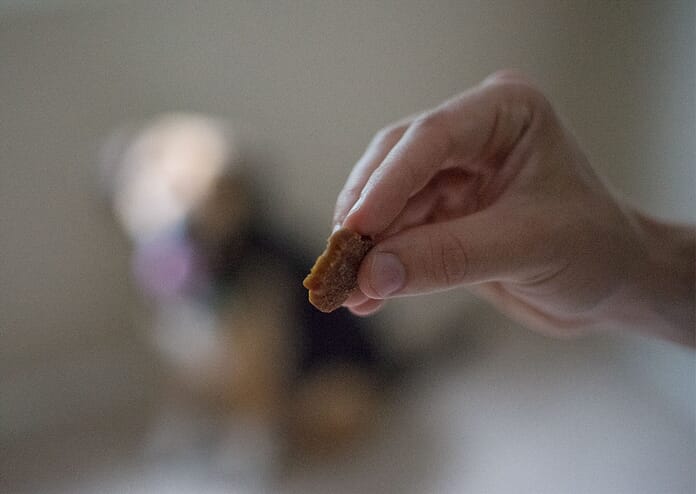
If you want a dog’s attention, offering some food is usually a good way to get it!
Find out what motivates your dog and use it to your advantage. Treats and toys usually do the trick for a little while.
Just hold their desired object in line with the camera’s lens and they’ll likely offer a direct, attentive gaze. From there, you can “pose” your pooch by requesting they sit or lie down.
dog toy bribes
Food not doing the trick? Try using a toy to get your dog’s attention!
If all else fails, some high-value human food can seal the deal.
Steak, anyone?
Source: GIPHYY
Even the pickiest dog isn’t going to turn down the chance to earn some fresh cold cuts or a spoonful of peanut butter!

Tip 2: It’s all in the eyes.

It doesn’t matter whether you’re photographing a dog, cat, or human – in 9 out of 10 scenarios, you want to focus on your subject’s eyes.
We connect with other living beings by looking into their eyes, and our four-legged friends are no exception. 
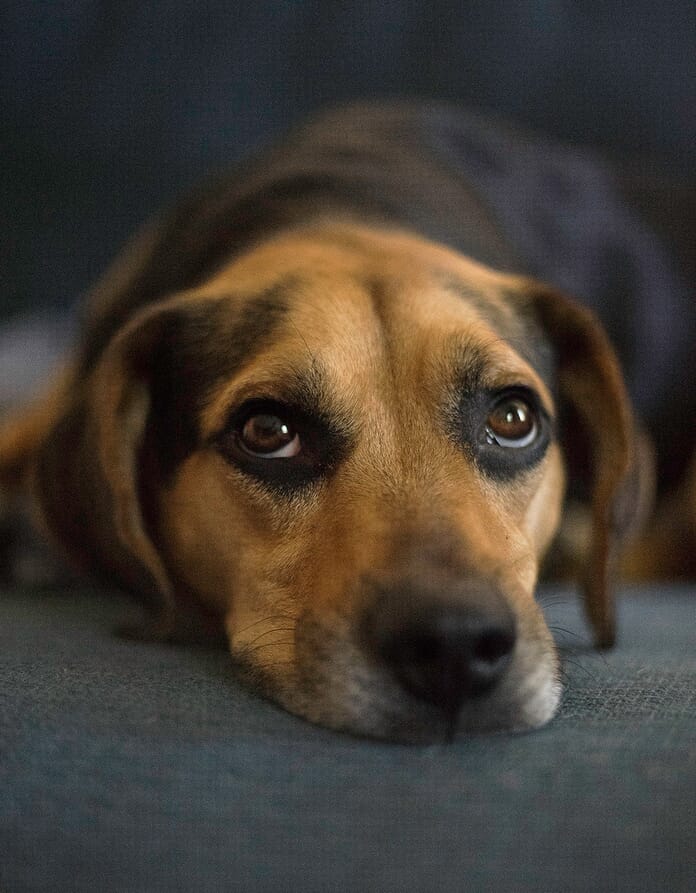
dog photography eyes
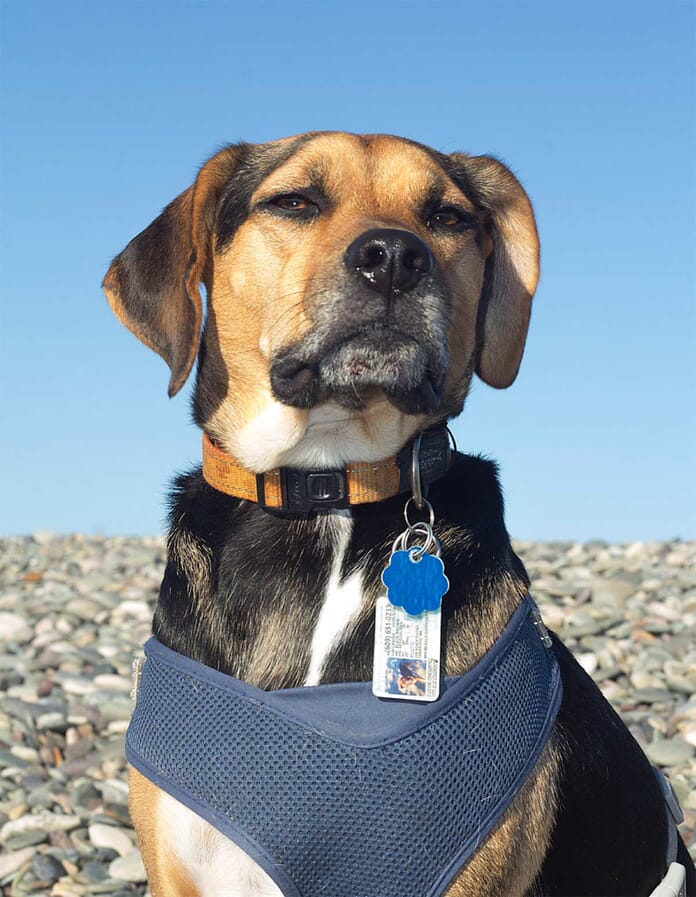
They say that eyes are the window to the soul, and dogs are no exception. The eyes are the most expressive feature, so be sure to hone in on them!
Keep in mind that some dogs are a little uncomfortable directly looking you in the eye. In such cases, you may have to improvise a little bit.
While they don’t need to be staring directly into the camera, the eyes need to be the sharpest part of your photograph.   
RELATED POST: Trying Out the Peak Design Everyday Backpack

Tip 3: Think about perspective

Dogs don’t see the world the way us humans do.
Bringing ourselves down to their level can make for a much more engaging image.   
If you always shoot downwards from five feet above the ground, your images will quickly become stale.
Instead, experiment with perspective.
Try to crouch or kneel down to get a “dog’s eye view”. 
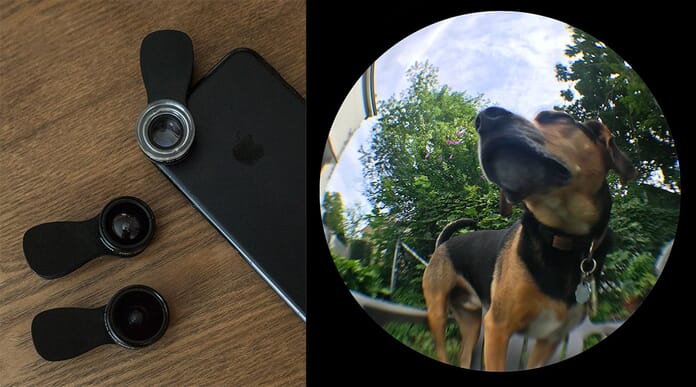
pet portrait perspective experiment
Don’t be afraid to experiment! I used some attachable mini lenses to take this fun fisheye portrait with my iPhone.
Depending on your subject, getting low to the ground may excite the dog. If this is the case, offer a few polite hellos and let the dog acclimate to you being on its level.
With time, it will calm down and become easier to photograph.

Tip 4: Show off some personality!

Ask any dog owner and they’ll relay to you that their dog has a mind of its own. To bring your photographs to the next level, challenge yourself to capture your subject’s personality in a picture.   
If you’re working with a client, take some time to ask about the dog you’ll be photographing.
Is it a silly, playful puppy? A crafty mutt willing to solve any puzzle for a treat? A regal show dog?
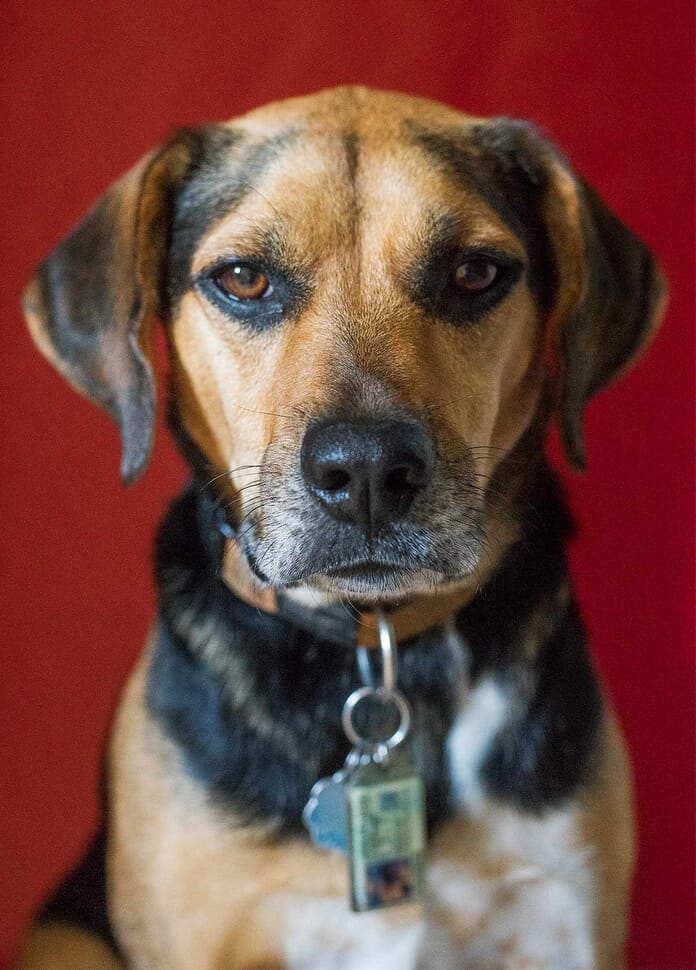
Dog personality in photography
Some dogs love to run. Others thrive on human attention. Pluto’s favorite thing to do is lie around with his stuffed dragon.
Once you know a little bit about who you’re working with, you can look out for the moments that really illustrate their defining traits.
While it takes a little bit of extra effort to get an expressive shot, the end result will be all the more meaningful to the client.  

Tip 5: Add depth with the background.

A good picture is elevated to a great picture when the right supporting details are in play.
Take some time to think about what’s going on around your dog if you want to make a truly outstanding pet portrait.
For instance, some play with colors can make for a more striking image.
A sharp contrast (like a red-haired Irish Setter against yellow autumn leaves) can immediately grab a viewer’s attention.
Likewise, an environment can highlight an animal’s existing aesthetic qualities (like a bright white Samoyed on a snowy day).
color pet portrait
A pop of color is a quick way to grab some attention.
For those unaccustomed to working with animals, just keeping a dog under control can be an enormous task.
However, it’s important not to forget about the basic elements that make or break a photograph.
If you’re lucky enough to work with a fairly laid back dog, you’ll have a little bit more freedom when it comes to setting a scene.
When working with animals, two of the most valuable assets a person could have are the abilities to improvise and empathize.
Easy going subjects may tolerate props. Some may even brave a studio setting.
That being said, keep an eye on your dog and don’t try to force it into a scenario in which it’s uncomfortable.
If the dog isn’t having whatever idea you’re trying to execute, move on to something else.

Tip 6: Head outside!

This dog photography tip is somewhat of an extension of tip #5, but it’s important enough to warrant it’s own places on the list.
So, in short…
When all else fails, venture outside.
Most dogs are happy, excitable, and just generally in their element when they’re allowed to roam around a bit. Even a small move to a backyard can bring a dog out of its shell.
pet portraits outdoors
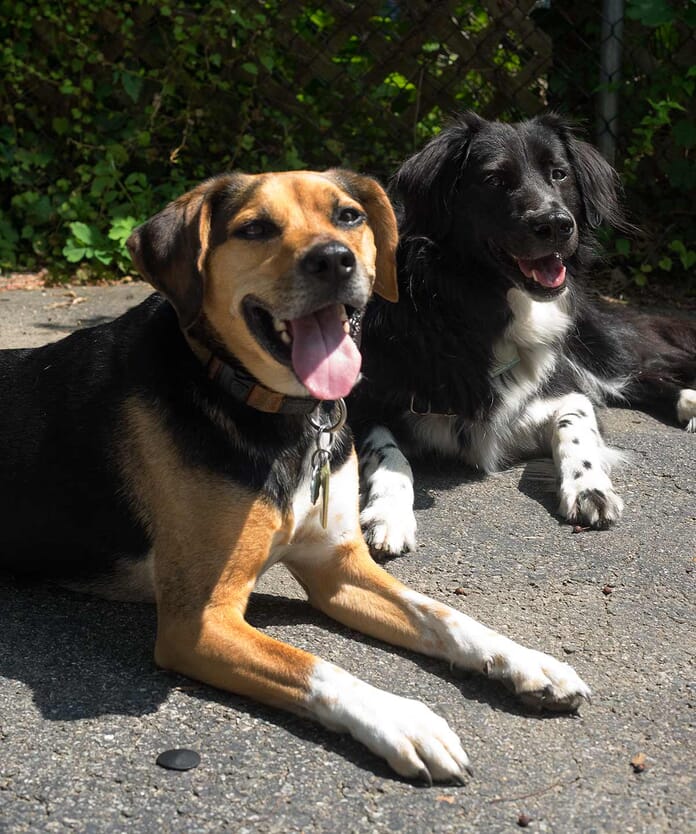
It’s clear to see how much Pluto and his friend Frank enjoy hanging out outdoors. If only the bright afternoon light had cooperated with me nearly as much as these two did!
If you’re working with an animal that can’t stay still or can’t get comfortable in a controlled environment, don’t give up.
A candid shot in a picturesque area can be just as successful.   
When making pet portraits for local clients, do a little bit of location scouting ahead of time.
Public parks are always a good bet – they’re often free to visit, dog-friendly, and offer a variety of different shooting scenarios.
RELATED POST: Review of the Best Professional Photo Printing Services

Tip 7: Don’t be afraid to bring in backup.

If anything else, dogs are social creatures. If you’re feeling a bit stuck or want to loosen your subject up, try bringing in someone (or something) familiar to the dog.
In particular, including the pet’s owner in your dog portrait can be incredibly beneficial.
An owner knows how to handle their dog better than anyone else. If you share what you’re trying to accomplish with their human counterpart, they can help to direct their pet.
Dog Human portrait
Pluto loves his dad. Bringing a person into a pet portrait can show off the strong relationship shared between a dog and their human
What’s more, what client wouldn’t want an adorable picture with their pooch?   
When you start to feel confident in your abilities, don’t shy away from working with more than one dog at a time.
Granted, grabbing both animal’s attention can be a bit of a challenge. However, interactions between dogs can produce more dynamic pictures.
photographing multiple dogs
You’d be surprised how easy it can be to work with two dogs at once. Pluto and Pearl were more than happy to sit still for the camera.

Tip 8: Move quickly.

This may seem a bit obvious, but a dog will rarely hold a pose for more than a few seconds.
In order to get great shots, you’ll have to work fast.
pet photography camera settings
Regardless of what camera you’re using to capture your pet portraits, be sure to use a fast shutter speed!
When working with animals, opt for shutter speeds fast enough to freeze motion. Besides stopping their actions, doing so will provide clearer expressions and details. T
here’s a lot of variables to take into consideration when photographing animals. Don’t let a little bit of motion blur be the thing that throws off your photo.
Keep your finger on the shutter and be ready to take your next photograph at any moment.
Don’t be afraid to shoot continuously. Sometimes, the best strategy is to shoot a burst of photographs and pick the best of the bunch later on.

Tip 9: Have patience!

Last but not least, be patient with yourself and with your subject.
It takes time to find the best strategy to photographing a new dog, especially when they’re young or excitable. You can’t expect to get a perfect shot right off the bat. 
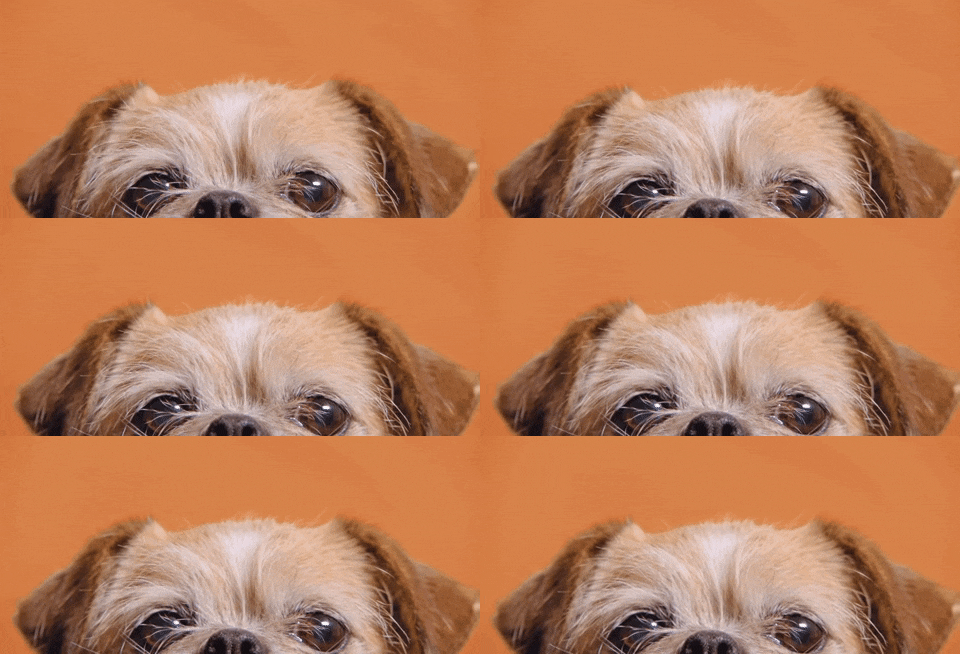
pet portrait session contact sheet
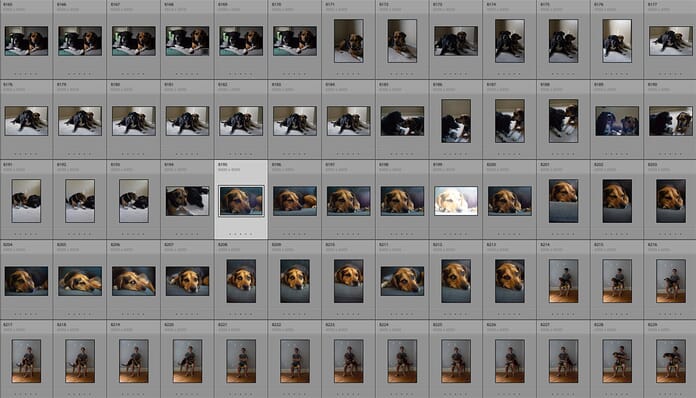
Here’s a peak at some of the shots I made for this particular article. Though I only presented a few images for the final product, it took dozens of tries to get the perfect picture.
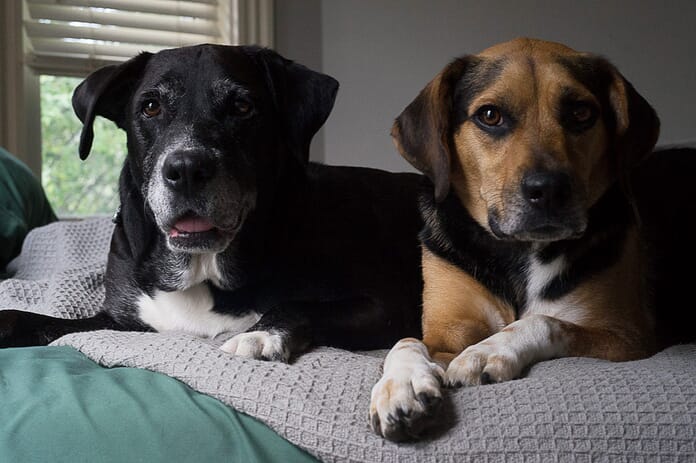
If you find yourself getting frustrated, try a different approach. Even the best photographers will leave a photoshoot with a few dozen flubs. Keep trying and remember that it takes just a few great images for a shoot to be a success!