Saturday, May 25, 2019

5 Tips for Taking Beautiful Photos of Nature

Nature photography encompasses a wide range of photos taken outdoors, and conveys natural elements such as landscapes, wildlife, plants, trees and flowers.
Whether you’re photographing sweeping natural scenes or close-ups of flowers, nature photography can be incredibly rewarding. Here are five tips for taking beautiful photographs of nature.
An example of taking beautiful photos of nature

Focus on the foreground

Being out in nature can be incredibly rewarding. And not just for photography. The fresh air, the scenery, and the experience itself are all great incentives to head outdoors with your camera.
An example of taking beautiful photos of nature
When capturing beautiful scenes in nature, your picture can benefit from a bit of foreground interest. When you find a magical landscape to photograph, do it some justice by including something interesting in the foreground. I see many nature photos showing empty landscapes and skies without any consideration for the foreground.
Don’t get me wrong. Nature images can look great with an atmospheric sky and inviting view. But adding a foreground will help make your image stand out. Throw in a rock or some flowers to your image, and the photo becomes much more striking. In this nature photo I included some dandelions
in the foreground to accentuate the scene.

Balance the photo

An example of taking beautiful photos of nature
Have you ever taken photos in nature and been disappointed with the images you produced? Returning from a photography outing with images that please you can be a challenge. So my next tip is to make your photos more balanced. Capture images of nature with careful consideration of what you include in the frame, and balance all of those elements.
For example, you maybe able to bring certain parts of the landscape together to improve your image, such as trees and mist. When you’re shooting outdoors, what things can you identify that would make a visually pleasing image?
An example of taking beautiful photos of nature

Use the right gear

Depending on the subject you’re photographing, it’s important to choose the right gear to get the best out of your images. Close-ups of insects or flowers would be best suited to a macro lens, which lets you get nearer to your subject. When faced with a wide vista, use a wide-angle lens to record a greater field of view.
On the other hand, if you’re shooting wildlife, telephoto and zoom lenses are usually the best option as they can help you zoom in closer to your subject. These aren’t hard and fast rules, but rather suggestions on what generally works regarding lens choice.
For example, if you’re photographing animals in a zoo, a wide-angle lens may be better than a telephoto lens if you want to capture more of the scene than just the animal, or if you’re positioned close to them.
An example of taking beautiful photos of nature

Capture different seasons

The advantage of nature photography is it can be done at any time during the year and in different seasons. Summer is a great time to document lush landscapes and green foliage when everything is in full bloom, whereas spring and autumn can provide blooming flowers, cooler climates, atmospheric weather and the occasional mist. The added benefit of autumn is the change in colours of autumn foliage, giving you opportunities for vibrant photos.
An example of taking beautiful photos of nature
Winter is another wonderful time to capture the brilliance of nature. While it can be harsh and cold, it can also be strikingly beautiful. A sprinkling of snow can look good in any nature photo.
An example of taking beautiful photos of nature
Snow can add contrast in landscape vistas. For example, the snow in this scene helps the dark silhouetted tree stand out. I also find that snow-capped mountains are wonderful subjects to photograph during the winter season.

Make the most of your natural surroundings

You don’t have to live in a beautiful and remote location to find amazing subjects of nature. You’ll find an abundance of things waiting to be photographed in your local area. I took this photograph five minutes from my home. Go outside and explore your own surroundings, and take photos in the best natural places close to home.
An example of taking beautiful photos of nature

Capturing photos of nature can be truly rewarding, and a great opportunity to be photographing outdoors.
Whether you’re a landscape photographer or prefer to shoot plants or wildlife, try putting these tips into practice. And feel free share your images and any other comments or tips below.

Share this article.

Newborn Photography Basics and the Equipment to Use

Many newborn photographers, especially those who specialize in purely newborn photos, have their own studio.
newborn-portable-studio-kit-equipment-dps-lily-sawyer-photo
Parents come to them with their newborns, and their studios are fully kitted-out with lights (unless they are a natural light only photographer), backdrops and props. Some newborn photographers also travel to clients’ home and bring with them their own portable studio.
When I started photography, I did all sorts under the sun. Weddings, families, children, events, birthdays, newborns, maternity…Cake-smash is the only obvious thing I can think of that I haven’t done.
Over time, I cut down on the others and focused on weddings. Now don’t get me wrong, I still do these photography genres, but reserve them for past and annual clients and referrals.
What I’ll share with you is my way of doing newborns, my preferences and the equipment I use. There are other ways and styles, so please don’t take this as gospel and the only way to do newborns. It’s just the style that I prefer. Instead, take this as some advice (if there’s any you find helpful), and as a choice out of the many styles out there.
Before we dive in, let me first say that I didn’t go into newborn photography without reading up on it and learning about safety. Safety is critical. You can’t wing it. Instead, you have to understand risks and take necessary precautions with your equipment, process, and workflow. Baby safety is of utmost importance, over and beyond poses, props and style.
newborn-portable-studio-kit-equipment-dps-lily-sawyer-photo

Choose a style

Your style dictates your equipment. If you want very natural looking photos, no poses, or plenty of candid captures, then you probably won’t need much equipment such as stands, backdrops, or softboxes. All you need are the basics – a camera, the correct lenses (24-70 or 50mm and a macro for close-ups like a 60mm), memory cards, batteries, reflector, speedlight (if using as a back-up).
If you like props, then it’s the opposite. You may need to use everything but your kitchen sink – baskets, bowls, wraps, flowers, textured rugs, fabrics, or toys. These are on top of all other photography equipment.
My preference is going to clients’ homes. I’ve done newborn shoots in my studio, but I prefer setting up in baby’s own home. I take my time and make sure everyone is comfortable and happy, especially the baby. Also, allowing for feeds and soothing. I know most specialist studios have the workflow scheduled to a T, taking an hour maximum and moving on to the next baby. That is fine too and makes good business sense.

1. Props

My style is simple and classic with a few props – namely blankets and wraps, sheepskin, and a basket. That’s it. I use soft fabrics to wrap the babies, so they feel secure. Sometimes I might add something extra depending on the situation, like these newborn twins, where I thought angel wings and a crown would look sweet, or a little flower hairband. Just don’t go over the top. Less is more when it comes to photographing newborns.
I also put them on a sheepskin or blanket to add texture. Usually, the sheepskin or blanket sits on top of a basket, so the babies are shaped curled up. I place the baby curled in there to represent the womb shape. The basket either sits on a beanbag on the floor or on the bed, which must be big, depending on the setup.
I like to keep props to a minimum and focus on the baby’s face, expressions, hands and feet, hair and the lighting.
newborn-portable-studio-kit-equipment-dps-lily-sawyer-photo

2. Poses

Never force a pose on a baby. I do 2-3 poses maximum. If the baby is not comfortable with a pose or not wanting to cooperate, I drop it (the pose not the baby!) and move on to an alternative. I like the bottom up pose, fetal position with baby curled up in a basket, mother and baby/father and baby poses.

3. Lighting

There are many lighting setups. However, I take a softbox with me, speedlights, transmitters, a stand for the softbox, and a reflector. My set-up is simple. I prefer everything on the floor, so that’s where I place the beanbag. A rectangular softbox on a stand sits at a 45-degree angle to the bean bag. Opposite the softbox is a reflector. I use a speedlight in the softbox rather than a strobe for portability. Don’t forget the adaptor for the speedlight to sit on. That’s it. Simple. This way, you can shoot whether there is natural light available or not, whether there is a window in the room , or it’s pitch black!

4. Backdrop

A basic portable backdrop stand kit, with two stands and a bar across to clamp on some fabric, has served me well. Choose material that doesn’t crease! Once I used a black cotton fabric which was so wrinkled I spent ages photoshopping the creases out and painting over the fabric. Luckily it was black and was possible in Photoshop. I sometimes use the backdrop on the beanbag with the baby on top to get a seamless fading background. I prefer a darker background to light colored ones.
newborn-portable-studio-kit-equipment-dps-lily-sawyer-photo

5. Other special items

I like to do the shoot as a story, so I always include other shots of the baby’s nursery. This story may include special newborn greetings cards, booties, or the most special toy gift for the baby. I check with the parents as to what they want capturing. These unique items are also why I prefer to shoot newborns in their homes – the shots become so personal to them and therefore more special.

6. Candids

I often end the session with natural, unposed shots of the family especially if there’s a sibling. That way, they have some memories together of their first few days as a family.

7. Editing

Unfortunately, in my experience, newborn editing takes up much time. Perhaps that’s because I like a more artsy look and there’s a lot of softening to do on the background to match the softness of the newborn skin. Not to mention cleaning up the newborn skin, which is often wrinkly and spotty with milk spots, or very red too. I aim to give the family a variety of images, so they have a good bunch of memories of those first days.

Conclusion

I hope this has given you a snippet of what newborn photography could look like for some. It’s different for others, but this is what I do. I’ve evolved from brightly lit newborn photos to moody, dark tones. Yours can be different. Just make sure it is something you love. Do share your thoughts in the comments below.

Share this article.

So You Have No Model? Here are Ways to Practice Your Portrait Lighting With Toys


Portrait lighting can be tricky to learn.
After reading articles and watching tutorials about light, you’ll excitedly look for a person to practice on. Although, once you finally have a person in front of your camera your mind goes blank and nothing is as easy as those tutorials made it seem. You forget all that information you’ve been overloaded with and feel foolish in front of your ‘model.’ Worst case scenario, you’ll become discouraged and give up.
Practicing portrait lighting with a toy
Superman was always my favorite.
But there is a way to practice basic portrait lighting techniques and build your confidence before photographing people. You can practice portrait lighting with toys until you feel comfortable enough to experiment with people.
You’ll learn how to position your subject and light source without the stress of working with a real person.
Once you understand the basic principles of portrait lighting your confidence will grow and you can keep learning new techniques and refining your skills.
Also, who doesn’t want an excuse to play with toys again?

Choosing the right toy

Choose a toy with a human figure so that what you learn can transfer easily when you photograph real people. Try to find one with pronounced facial features so that there will be realistic shadows created.
Your toy should have some texture too. This is important because it helps you to see how the light affects your subject. As light skims across a textured surface, it will create highlights and shadows, which will help your portrait to pop. Everybody who sits in front of your camera will be textured (hair, skin, and clothes).
portrait light and texture
This Superman toy has lots of texture and muscular looking features. His face has
pronounced features that mimic a real person’s face.

Using a flashlight (hard light source)

Quality of light refers to the hardness or softness of the light.
A general rule is that the smaller the light source, the harder the light will be. This means that there will be deep, crisp shadows. The larger the light source, the softer the light will be. The difference between the shadows and highlights will be much less intense.
I’ll begin by using a flashlight as a hard light source. The basic lighting patterns will be easier to see with hard light.
In each of these sample photos, we’ll focus on the direction of light and what happens as we move the light around.
  • Front
  • Rembrandt
  • Side/split
  • Edge
  • Back/silhouette
  • Uplighting
I kept my Superman figure in one place and simply moved the light around it.
The first image is the lighting set up and the second image is the portrait.

Front light

front light portrait
The light is placed directly in front of your subject. It’s a little higher than his eye level.
front light portrait
You can see that he is evenly lit with a crisp shadow under his neck created by his jawline.

Rembrandt light

Hard Rembrandt light
This is a classic lighting pattern named after the painter, Rembrandt.
Reposition the light so that it hits your subject on a 45-degree angle. It’s still a little above eye level.
hard Rembrandt light
The left side of his face becomes shadowy, but there is a triangle of light under his eye.

Side light/Split light

Hard side light.
The light has now been positioned directly beside him.
Hard side light
The light now only illuminates one side of him. His face is split between shadow and highlight.

Edge light

hard edge light
Swing the light around so that it shines over his shoulder.
Hard edge light
The only light that we can see now is the edge of his face, shoulder, and arm.

Backlight

hard backlight
Put the light right behind your subject.
Hard backlight
This is similar to the edge light effect except that the light is directly behind him now. If the
light source were larger (perhaps a sunset sky) there would be more of a silhouette effect. But
the dark background has created a very mysterious look for this low key portrait.
Hard backlight
This is the exact same lighting situation except that I increased my ISO to make a brighter
exposure.

Uplight

Hard uplight
To achieve this dramatic looking portrait I placed the light at his feet and shone it up toward 
his face. Uplighting is sometimes referred to as ‘monster lighting.’

Using a window (soft light source)

Now that we’ve seen how light can be used with a harsh source, let’s look at the same techniques with more subtle soft lighting.
In this case, we can’t move our light source, so we’ll have to move the subject in relation to the window.
We’ll cover:
  • Front
  • Rembrandt
  • Side/split
  • Edge
  • Back/silhouette

Front light

Soft front light
The window is right behind me, shining directly on Superman.

Rembrandt light

Soft Rembrandt light
The window is beside him, but notice that I place him back from the window a bit.
Soft Rembrandt light
The right side of his face becomes shadowy except for that triangular patch of light under
his eye.

Side light

Soft side light
I’ve now moved him forward so that the window is directly beside him.
Soft split light
The light splits his face and body into a highlight on one side and shadow on the other.

Edge light

Soft edge light.
You can see the window behind him on the left side of the photo. It’s behind him but off to the 
side so that it illuminates the edge of his head, shoulder, and arm.

Backlight/silhouette

Silhouette
The window is directly behind him. Because it is such a large, bright light source the
portrait has become a silhouette.

Creative

Because I wasn’t working with a real person, I felt comfortable experimenting with some creative lighting. The more I relaxed and the longer I practiced, the more I began to notice interesting lighting situations.
creative lighting backlight edge light
The glare on the table acted as a backlight source, creating a silhouette. The light from the
window became an edge light source, tracing his upper body and making it stand out from
the dark background.
warm edge light
This is the window edge light photo from above. I cropped the window out and used a radial
filter in Lightroom to make that subtle burst of warm light in the top left corner of the photo.

Two light sources

Let’s look at a three-step progression from one light to two.
silhouette
The glare on the desk is from a window in the background. It’s a backlight source that has
created a silhouette.
two light creative portrait.
I decided to set up my flashlight again to add some light on his face.
creative split light silhouette
Finally, I turned his body more toward the flashlight to illuminate his chest but turned his face 
back toward the camera to create a split light effect across his face.

More advanced

The leap from practicing with toys to photographing real people may still be a little uncomfortable, but at least you’ll have some success behind you. Just focus on one thing at a time. Use a window to make a soft Rembrandt light portrait of a friend. Or try a dramatic split light photo using off-camera flash.
Once you feel comfortable with the basic lighting techniques we’ve covered you can practice these more advanced techniques using real people:
And when you’re seriously ready to go pro with your lighting you’ll need to read, How to Create Awesome Portrait Lighting with a Paper Bag an Elastic Band and a Chocolate Donut.

Friday, May 24, 2019


FORREST WALKER

Street photography is hard to do well. Really hard. Even if you are great, most of your shots will not be.

The Internet is filled with boring street photography. The biggest problem is people thinking any photo taken on the street is now street 
photography. There is so much more to street photography than that, so how do you capture more in your street photography?
One way to strive for great street photography is by avoiding some of the habits of boring street photography.
Here are 7 of the most common habits of boring street photography.

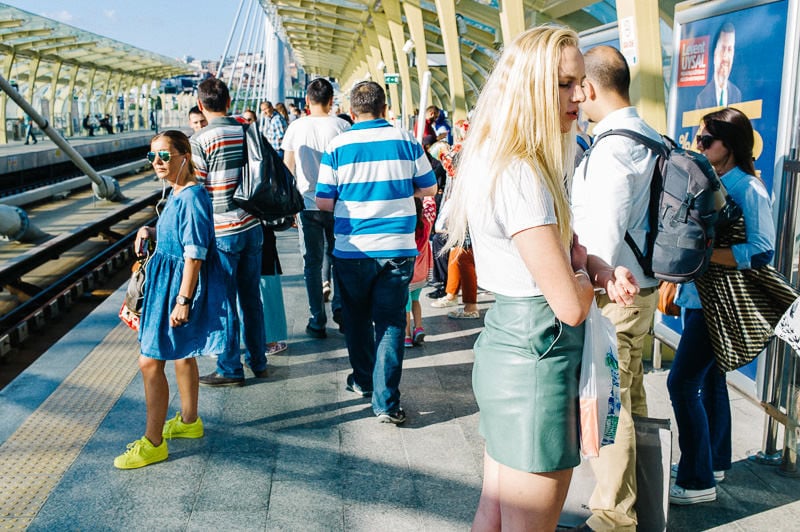
Habit #1. Nothing of Interest in the Photo

If a photo has nothing interesting in it then odds are it won’t be an interesting photo. This should be obvious, but judging by the millions of street photos online, it’s not. A random picture of a street or group of people probably won’t have anything interesting in it, even if you add a black and white filter.
Looking for something of interest before you snap the photo is the first step towards avoiding boring street photography.
A bunch of people standing around. What are you supposed to be looking at? (The yellow shoes aren’t that interesting)

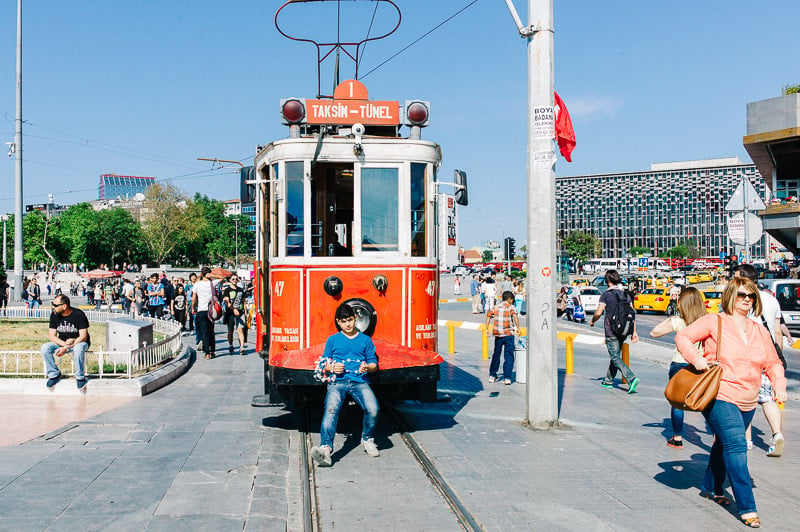
Habit #2. Too Far Away

Many people like to stay at a far distance when they take the shot. The problem with this is that the distance becomes part of the feeling of the photo, even if you’re using a telephoto lens.
So if you’re far away, it will look and feel like you’re far away. Usually, this translates to a boring a photo because the viewer doesn’t feel like they are part of the scene. If you can’t feel, or sometimes even see, what’s going on, then it’s hard to grab anyone’s interest.
With so much in the scene so far away, what can you really focus on? The guy on the trolley only makes you want to be closer so you can actually see him.

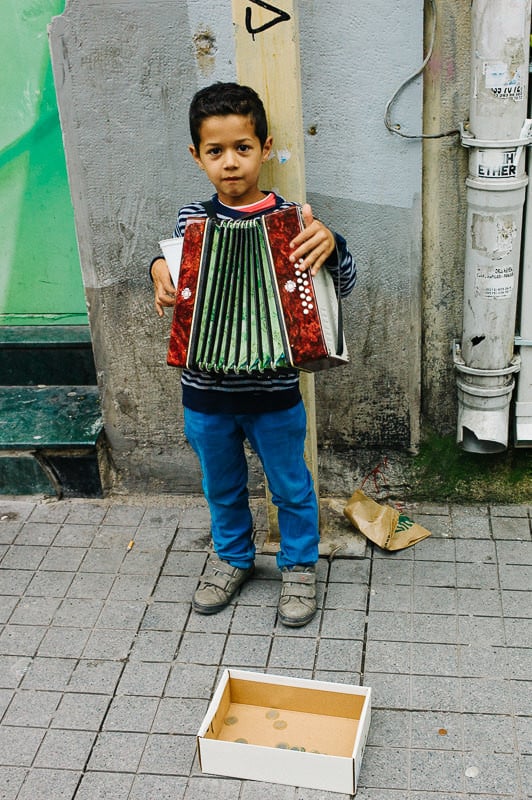
Habit #3. Street Performers and Homeless

Among the most popular subjects shot in street photography are street performers and the homeless. Why? Usually because it’s easy. They stay in one place and rarely mind (or even notice) if you take their photo.
The problem also is that it’s easy. If you take a simple shot of them then it will look like millions of other photos of the same subject. That same street performer has their photo taken hundreds of times a day by everyone and every photo looks identical. Identical is boring.
Cute kid? Sure. But in 1 minute I saw 5 different tourists take the exact same photo of him.
Personally, I’m against photographing the homeless unless you’re actually going in-depth and personal into their world. For me, it just looks like you’re exploiting them unless there’s a personal side to it. There are some photographers who do it well, though, but they get more personal with it and treat the people with care. It’s not a simple snapshot while they walk by them on the street. They spend more time and energy into bringing out some genuine feeling.
If you really like shooting these subjects, trying to add more to the photo than a simple shot of the person will help make it stand out from the sea of other identical shots.

Habit #4. Too Much Bokeh

Everyone loves bokeh and that look where the background is all creamy smooth and the subject is crisp and pops out at you. In street photography, unless you’re doing street portraits, bokeh can also be a bad thing, though.
Say you have a photo of a whole scene, but only one small subject in the scene is in focus. Everything else in the scene, some of which might add interest, is turned into blurred, empty space. You can end up losing out on everything the scene had to offer, making it more boring.
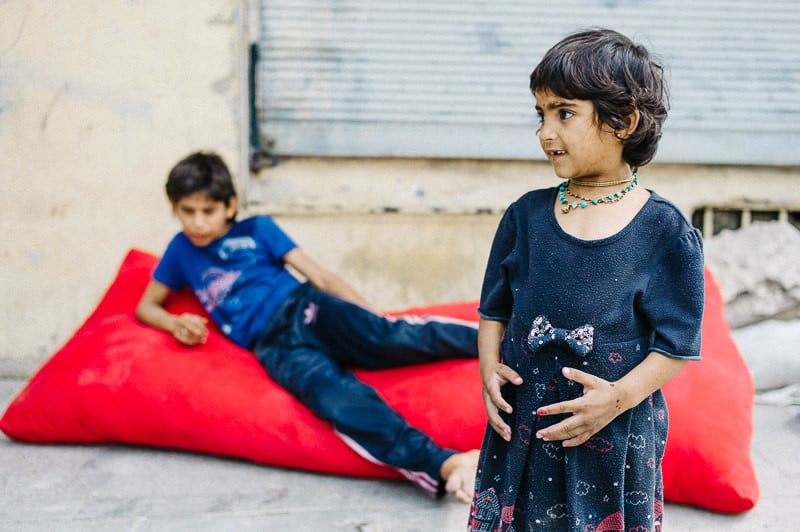
The blurred out boy and background only removes interest from the photo and makes the photo look messy.
Bokeh in street photography can also run you into the trap of looking cliché, tacky or losing some authenticity.
It all depends on what you’re going for, though. Bokeh isn’t all bad in street photography, just make sure it adds to the strength of your photo instead of taking away from it.

Habit #5. People Doing Nothing Special

Everyone’s seen a man sitting on a bench or a person waiting at a crosswalk thousands of time before. If there’s nothing special about it other than that, then it’s probably going to be boring.
If you’re going to take a photo of a person in the street, make sure they either have something interesting about them or they are doing something interesting.
Look for gestures, character, lighting, or something unique. If they have none of this, then it won’t capture anyone’s attention. It will just look like another person on the street. Boring.
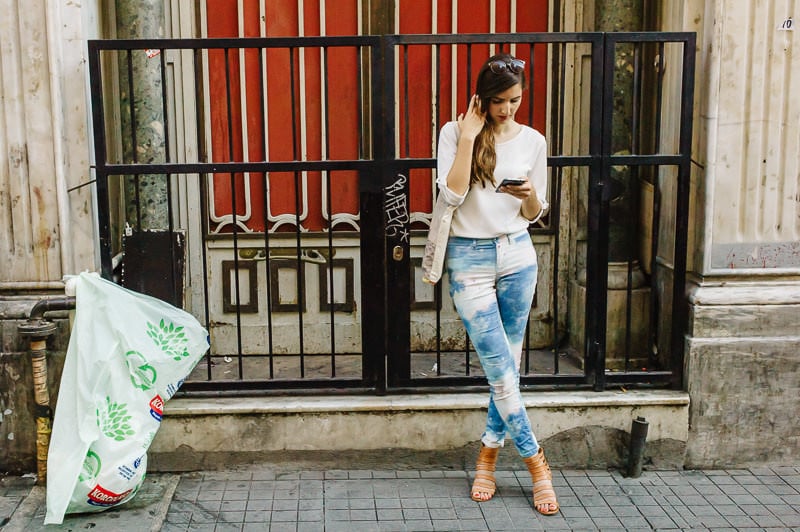
She’s standing on the street while looking at her phone. How often do you see that?
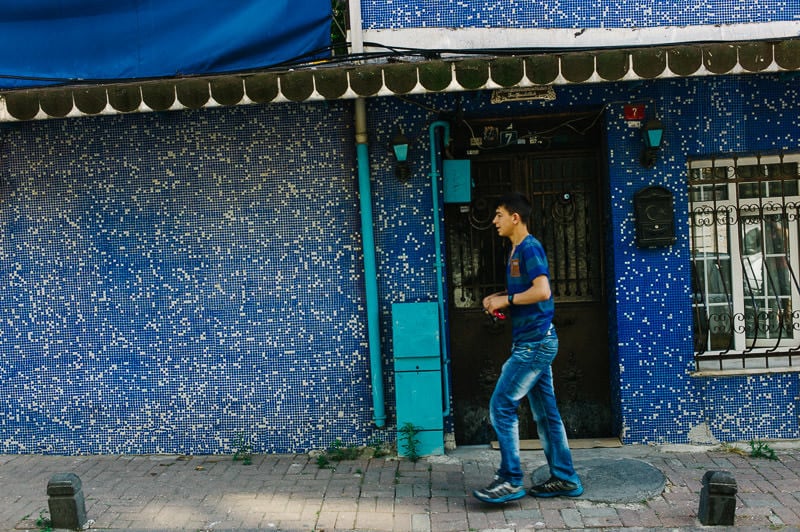
And then there’s the most basic and trendy street photography technique of all. See a wall and wait for someone to walk by.
A person walking by a wall. Something that happens a thousand times a day to that same wall.
Even if Picasso himself painted the wall, it’s still just a person walking by a wall. There’s nothing unique or interesting about that.

Habit #6. No Composition

Many photos, especially in street photography, look like someone just quickly pointed their camera and clicked without even thinking about the frame. They even have a term for this technique, “Spray and Pray.” This might come from rushing to take the photo out of fear. Or maybe the photographer just didn’t care enough to frame and compose the scene.
Side of girl directly in the center, empty wall space all to her right, man overlapping the car and almost out of the frame to the left…no composition.
You don’t always have to have perfect composition, but you should try to put some thought into it. What do you want to include and what don’t you want to include in the frame. How do you want to compose everything and how do you want the framing to look. It all affects the photo’s interest.
If you don’t put any thought into the composition, it will probably show in the photo. Leaving composition to chance doesn’t leave you with great odds of capturing an interesting photo.
Things are happening in this scene, but poor composition doesn’t bring this out.

Habit #7. Over Edited

There’s so much you can do with a photo today because of editing. This is great, but it can also be a trap for editing too much. Crazy edits might look cool to you at first, but when that wears off, it can look plain ugly.
In street photography, you also have to be careful not to lose some of the authenticity of the photo. If the editing adds to the feeling you are trying to portray, that is great. If it turns it into something that looks more like CGI than real life, then it’s probably not.
This isn’t cool, this is ugly.

Bonus: Using Black & White For Interest

This is just to add onto these 7 common habits. One thing I notice is that many photos that fall into these habits like to apply a black and white filter to help make it more interesting. Black and white does not fix a boring photo. A boring photo is a boring photo.
If black and white is your choice of medium, you should be thinking in black and white when you take the photo. Don’t use black and white to make the photo work, use the photo to make the black and white work.
Black & white, but still boring.
If you find that you do some of these, don’t worry about it. We all have and probably still do sometimes. The main questions you want to ask yourself is “Why are you taking the photo?” and “What are you trying to show or say in it?”. Just by looking to say or do more than clicking a shutter, you’ll already put yourself ahead of most street photography out there.
Focusing on making it interesting is the best habit to make it not boring.
Share this article.